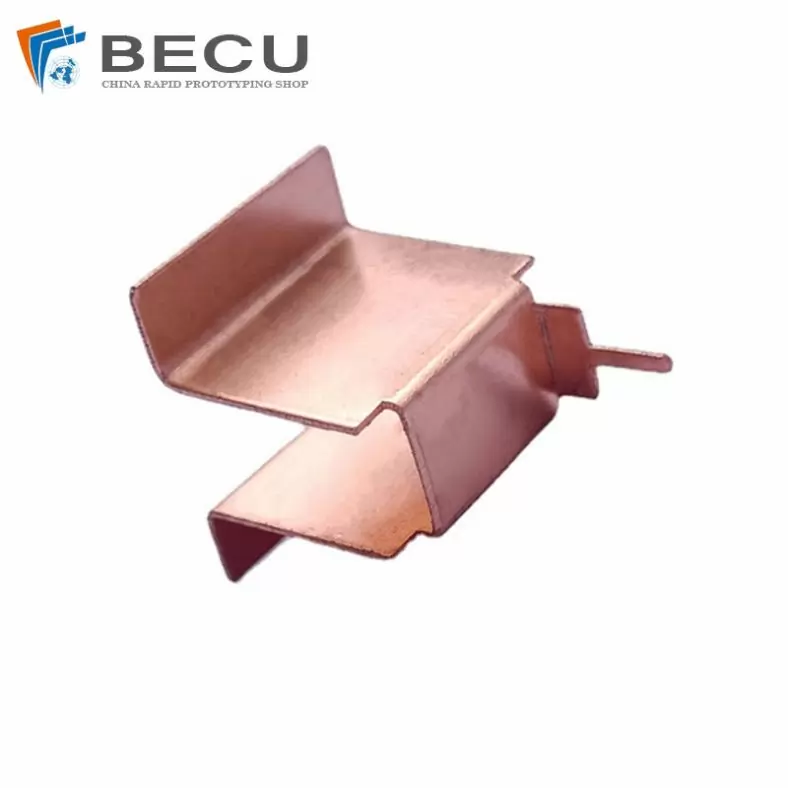

Copper Deep Drawing
Copper is a reddish-brown metal with exceptional properties that make it suitable for various applications. It has a high electrical and thermal conductivity, which makes it a key material for electrical wiring and components.
Copper is also known for its corrosion resistance, especially in marine environments, due to the formation of a protective oxide layer on its surface. These properties, along with its ease of forming, have made copper an ideal material for deep drawing processes.
One of the most significant characteristics of copper is its excellent ductility, which allows it to undergo significant deformation without cracking. This is particularly important in deep drawing, where the material is subjected to considerable tensile stress. Copper’s ability to form easily under pressure and maintain its integrity during the drawing process makes it suitable for creating parts with intricate geometries and thin walls. However, it is also prone to work hardening, a phenomenon that can increase the strength of copper as it is deformed but can also make the material more difficult to work with during subsequent drawing stages.
Copper deep drawing is a complex and highly specialized process in manufacturing, particularly used to shape copper into components for various industrial applications. This process involves the use of a punch and die to form sheet metal into three-dimensional shapes, with copper being a common material due to its excellent combination of ductility, thermal conductivity, and resistance to corrosion. Deep drawing of copper allows the production of a wide range of products, from simple cups and containers to intricate components for electronics, automotive, aerospace, and electrical industries.
Copper Alloys Used in Deep Drawing Stamping
Copper alloys are widely used in deep drawing and stamping processes due to their unique combination of mechanical properties, including excellent ductility, thermal and electrical conductivity, and corrosion resistance. These properties make copper alloys suitable for a wide range of applications, from intricate electronic components to industrial machinery parts. In deep drawing and stamping, copper alloys undergo significant deformation, and their ability to retain integrity under stress while achieving complex shapes is crucial. This section explores the various copper alloys used in deep drawing and stamping applications, discussing their properties, advantages, and typical uses.
C11000 (Electrolytic Tough Pitch Copper)
Properties: C11000 is known for its high electrical and thermal conductivity, making it an ideal material for electrical applications. It is highly ductile and can be easily deep drawn and stamped into a variety of shapes.
Advantages: Excellent formability, high conductivity, and corrosion resistance.
Applications: C11000 is widely used for manufacturing electrical connectors, wires, and other components that require high conductivity. In deep drawing, it is often used for making parts such as electrical terminals, busbars, and other components in electrical and electronic devices.
C26000 (Brass)
Properties: Brass is a copper-zinc alloy that offers excellent strength, formability, and corrosion resistance. The addition of zinc increases its hardness and tensile strength, making it suitable for deep drawing applications that require more strength compared to pure copper.
Advantages: Brass has good machinability, high resistance to corrosion, and is highly versatile in terms of both mechanical and aesthetic properties. Its golden color and surface finish are also highly desirable in decorative applications.
Applications: Brass alloys, particularly C26000, are commonly used in the automotive, plumbing, and electrical industries for components like fittings, connectors, and decorative items. In deep drawing and stamping, C26000 is used to produce items such as electrical terminals, cartridge cases, and small precision parts.
C27000 (Cartridge Brass)
Properties: C27000, also known as cartridge brass, is a commonly used brass alloy in stamping and deep drawing due to its excellent combination of strength, ductility, and resistance to corrosion. This alloy exhibits good formability and can be easily worked into complex shapes without cracking or breaking.
Advantages: Good cold workability, resistance to corrosion, and the ability to form intricate shapes make this alloy ideal for high-volume production of small to medium-sized components.
Applications: C27000 is often used in the manufacturing of ammunition casings, electrical connectors, and other stamped parts in the automotive and electronics industries. Its good formability allows it to be used in deep drawing applications requiring significant deformation.
C92200 (Aluminum Bronze)
Properties: Aluminum bronze is a copper-aluminum alloy known for its exceptional strength and resistance to wear and corrosion, especially in marine environments. The alloy has excellent fatigue resistance and can maintain its mechanical properties at elevated temperatures.
Advantages: Aluminum bronze offers high strength, excellent corrosion resistance, and good machinability. It is also highly resistant to seawater corrosion, making it an excellent choice for applications in marine and other harsh environments.
Applications: C92200 is widely used in the manufacturing of marine hardware, pumps, valves, and gears, where its corrosion resistance and strength are essential. In deep drawing and stamping, aluminum bronze is used for producing durable and strong parts for heavy-duty machinery and marine equipment.
C28000 (Muntz Metal)
Properties: Muntz metal is a brass alloy known for its strength and corrosion resistance, especially in marine environments. The higher zinc content compared to other brass alloys gives it greater strength and hardness, making it suitable for more demanding applications.
Advantages: Stronger and more durable than other copper alloys, Muntz metal offers excellent resistance to corrosion in marine and industrial environments. It can also be easily deep drawn and stamped into complex shapes.
Applications: Muntz metal is commonly used in marine and architectural applications, including shipbuilding, architectural cladding, and heavy-duty fasteners. In deep drawing, it is used for producing components that require strength and corrosion resistance, such as marine hardware and industrial fittings.
C36000 (Free-Cutting Brass)
Properties: C36000 is a brass alloy with the addition of lead, which enhances its machinability. This alloy has good strength, formability, and excellent resistance to corrosion, but its key advantage is its ability to be machined easily.
Advantages: The addition of lead makes C36000 one of the most machinable copper alloys, allowing for faster production rates and reduced tool wear. It is also highly resistant to dezincification and is ideal for applications where precise tolerances are necessary.
Applications: C36000 is used in high-precision deep-drawn parts such as fittings, valves, and connectors, particularly in the automotive, plumbing, and electrical industries. Its ease of machinability also makes it suitable for mass production of complex stamped parts.
C41000 (Copper-Silver Alloys)
Properties: Copper-silver alloys such as C41000 combine the excellent properties of copper with the enhanced hardness and thermal stability offered by silver. These alloys tend to have high wear resistance and strength.
Advantages: The addition of silver improves the material’s ability to withstand high temperatures and wear, making it suitable for applications requiring both formability and durability under challenging conditions.
Applications: C41000 is typically used in components that need to withstand high wear and heat, such as electrical contacts, switchgear, and other precision parts in the electronics and aerospace industries. It is often used in deep drawing and stamping for electrical connectors and contacts.
C10100 (Oxygen-Free Copper)
Properties: Oxygen-free copper, as the name suggests, is free from oxygen, which makes it highly conductive and resistant to embrittlement. The absence of oxygen allows for better performance in high-temperature and high-humidity environments, where traditional copper alloys might suffer from oxidation.
Advantages: C10100 is known for its high electrical conductivity, making it ideal for applications where optimal electrical performance is required. It is also highly resistant to corrosion and can withstand severe environmental conditions.
Applications: C10100 is often used in the production of electrical wires, cables, and connectors, particularly in high-end electronics and telecommunications equipment. In deep drawing and stamping, it is used for precision components where electrical conductivity and corrosion resistance are critical.
Copper alloys are an indispensable material in deep drawing and stamping processes, offering a unique balance of strength, ductility, conductivity, and corrosion resistance. Various copper alloys, such as C11000, C26000, C27000, C36000, and others, are utilized depending on the specific requirements of the application. Their use spans industries from electronics and automotive to marine and aerospace, where their ability to be easily formed into complex shapes makes them invaluable. By selecting the right copper alloy for deep drawing and stamping, manufacturers can achieve high-quality, durable parts for a wide range of applications.
Copper Deep Drawing Stamping – Deep Drawn For Copper Alloy
Copper deep drawing remains a critical manufacturing process across various industries due to its ability to produce complex, high-strength parts with minimal material waste. BE-CU Offering Copper Deep drawing services for tubes, shells, and cans.
ISO 9001:2015 certified. Fabricators of Copper deep drawn metal stampings and parts for the industrial, automotive, medical, electronics and appliance markets. Capable of drawing parts from .125 in. to 3.125 in., diameters from .08 in. to 2.5 in. and thickness of .006 in. to .050 in. Finishing services include deburring, polishing, lacquering, painting, slotting, plating and heat treating. In-house tooling with design and engineering assistance available. JIT delivery. Made in the China.
Other stamping methods include coining, continuous, progressive die, fourslide, compound die and punch press. Additional services such as assembly, plating, swaging, trimming and welding provided. Prototype and low to high volume production runs available.

Applications of Copper Deep Drawing Stamping
Copper deep drawing is used in a wide range of industries, with applications spanning from the production of basic containers to highly complex components used in electronics, automotive, aerospace, and electrical industries.Copper deep drawing stamping is widely used across various industries:
- Automotive Industry: In the automotive sector, copper deep drawing is often used to create components like heat exchangers, radiators, and fuel tanks. Copper’s excellent thermal conductivity makes it ideal for these applications, where efficient heat transfer is crucial. Deep-drawn copper components can also be found in air conditioning systems and electrical systems, such as wiring and connectors.
- Aerospace Industry: Copper’s resistance to corrosion and its ability to withstand high temperatures make it an essential material in the aerospace industry. Deep drawing is used to produce a variety of components, including heat shields, electrical connectors, and turbine components, where the material’s thermal conductivity and strength are key properties.
- Electrical Industry: Copper is widely used in the electrical industry for its high electrical conductivity, and deep drawing is an essential process for producing components such as electrical contacts, connectors, and terminals. Deep-drawn copper parts are often used in circuit boards, transformers, and other electrical devices.
- Consumer Goods: Copper deep drawing is also used in the production of consumer goods, including cookware, musical instruments, and decorative items. Copper’s aesthetic appeal, combined with its functional properties, makes it a popular choice for items that need both durability and visual appeal.
Our Parts Case Studies Gallery Of Copper Deep Drawing Stamping
We perform an efficient, accurate, and cost-effective process in-house to provide superior product results for your copper deep drawing.Whether you require punching copper pieces or custom copper parts, we can easily help you. With our expertise in precision copper deep drawing and the ability to integrate external combined processes, we can ensure the best performance for your deep drawing copper projects.