
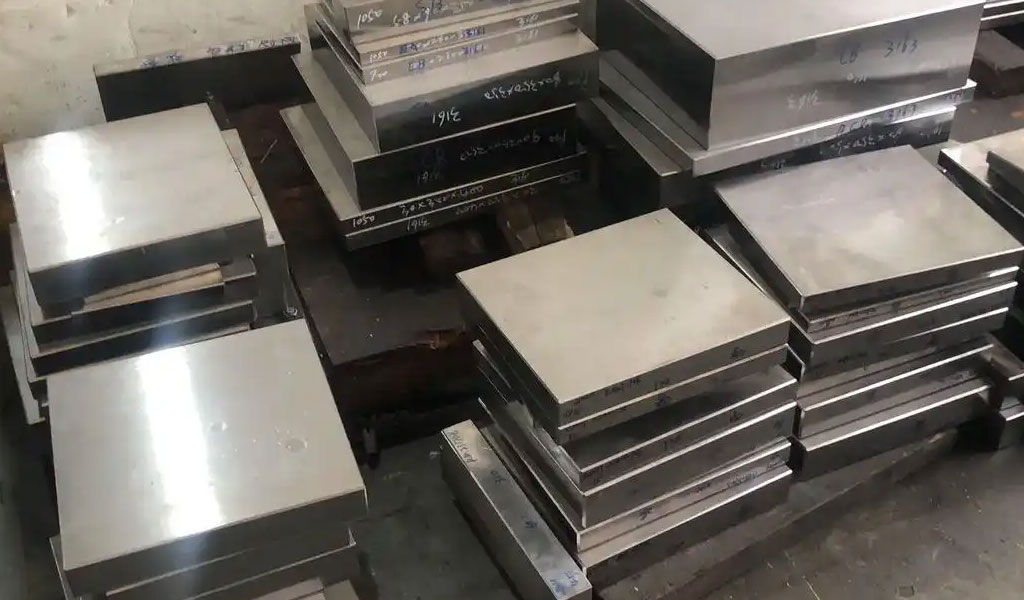
P20 automotive die steel, a high-quality tool steel widely used in the manufacturing of molds and dies, is crucial in producing parts for the automotive industry. Its optimal performance, especially in terms of wear resistance, hardness, and toughness, is essential for long-lasting die life and effective automotive component production. Surface enhancement techniques, such as laser quenching, have garnered attention for their ability to modify the microstructure and mechanical properties of steel surfaces without altering the bulk properties. Laser quenching is a type of heat treatment that employs a high-intensity laser beam to rapidly heat the surface of a material, followed by rapid cooling, which results in the formation of a hardened surface layer.
This process is particularly useful for P20 die steel, as it allows for targeted improvements in surface properties such as hardness, wear resistance, and fatigue strength, without the need for extensive and costly modifications to the entire component. This article explores the effects of surface laser quenching on the microstructure and properties of P20 automotive die steel, providing a comprehensive examination of its mechanical behavior, advantages, limitations, and potential applications.
Properties of P20 Automotive Die Steel
P20 is a chromium-molybdenum tool steel that exhibits a good balance of hardness, toughness, and machinability, making it suitable for high-performance molds and dies in various automotive applications. The chemical composition of P20 typically includes approximately 0.35% carbon, 1.4% manganese, 0.3% silicon, 0.4% chromium, and 0.3% molybdenum, among other elements. These alloys give P20 die steel its characteristic properties, including:
- Hardness: P20 steel can achieve a hardness in the range of 28-32 HRC in the annealed state, which is appropriate for applications requiring moderate wear resistance.
- Toughness: The steel offers excellent toughness due to its relatively low carbon content and good grain structure.
- Machinability: It can be easily machined and fabricated, an important trait when creating complex molds.
- Wear Resistance: Although P20 exhibits reasonable wear resistance, surface treatments like laser quenching can enhance this property significantly, especially in demanding automotive applications.
While these properties are well-suited to many standard tooling applications, improvements are often required to meet the more stringent demands of high-volume production in the automotive sector. This is where surface enhancement methods like laser quenching become invaluable.
Laser Quenching Process
Laser quenching involves the use of a high-power laser beam to locally heat the surface of a material to a temperature typically between 800°C and 1200°C. The heating rate is rapid enough to induce a phase transformation in the material, often leading to the formation of a martensitic microstructure upon subsequent rapid cooling. The rapid cooling is typically achieved through the use of forced air or the natural cooling of the material, depending on the setup. This results in a hardened surface layer with improved mechanical properties.
Laser quenching can be further categorized into two main techniques:
- Laser Hardening: Involves a uniform laser beam that uniformly heats the surface of the steel to a temperature where phase transformations occur, without melting the material. The hardness of the material is increased due to the formation of martensite.
- Laser Surface Hardening with Alloying: This technique involves the addition of alloying elements such as boron, carbon, or nitrogen to the surface during the quenching process. This helps in achieving a surface with enhanced wear resistance and corrosion properties, in addition to increased hardness.
The primary advantage of laser quenching is its ability to treat only the surface of a material, preserving the underlying bulk properties such as toughness and strength, while selectively improving the surface properties that are most critical for die steel applications.
Effect of Surface Laser Quenching on the Microstructure of P20 Die Steel
The microstructure of P20 die steel after laser quenching is one of the most critical factors influencing the mechanical properties of the material. Laser quenching induces rapid cooling, which results in phase transformations that significantly alter the material’s microstructure. The most notable transformation is the formation of martensite, a hard, brittle phase that improves surface hardness but may also result in reduced toughness if excessively hardened.
- Martensite Formation: Martensite is a supersaturated solid solution of carbon in iron, which forms when austenite is rapidly cooled below its critical cooling rate. The laser quenching process induces localized austenitization followed by rapid cooling, leading to the formation of martensite in the surface layer. The depth of the martensitic layer depends on factors such as the laser power, beam speed, and cooling rate.
- Grain Refinement: One of the important aspects of the laser quenching process is grain refinement. The rapid heating and cooling promote the formation of finer grains in the surface layer, which can improve the material’s mechanical properties, including strength, hardness, and fatigue resistance.
- Residual Stresses: Laser quenching can also induce residual stresses in the surface layer due to the thermal gradients and rapid cooling rates. These residual stresses can either enhance or degrade the performance of P20 steel depending on their distribution and magnitude. Residual compressive stresses can be beneficial for improving fatigue resistance, while tensile residual stresses may lead to cracking or premature failure.
- Phase Transformation Depth: The depth of the hardened layer formed during laser quenching is a critical parameter. Laser quenching typically results in a shallow hardened layer, which can be tailored based on the process parameters such as laser power, scanning speed, and the use of any additional alloying elements. In P20 die steel, the depth of the martensitic zone generally ranges from a few microns to several millimeters, depending on the conditions.
- Carbide Precipitation: In P20 die steel, the presence of alloying elements like chromium can lead to the precipitation of carbide phases during the laser quenching process. These carbides are typically formed in the austenitic phase before quenching and can contribute to wear resistance and hardness in the surface layer.
Effect of Laser Quenching on the Mechanical Properties of P20 Die Steel
The mechanical properties of P20 automotive die steel are significantly enhanced by laser quenching, particularly in terms of surface hardness, wear resistance, and fatigue strength. The improvements in these properties make P20 die steel more suitable for demanding automotive die applications, where high-performance tooling is required.
- Surface Hardness: The most notable effect of laser quenching is the increase in surface hardness. The formation of martensite in the surface layer leads to a significant increase in hardness, often surpassing 60 HRC (Rockwell Hardness) in the quenched zone. This enhanced surface hardness makes P20 die steel more resistant to wear and deformation during use.
- Wear Resistance: The increased hardness due to laser quenching directly translates to improved wear resistance. The wear resistance of the surface is crucial for the longevity of automotive dies, which are subject to abrasive conditions during high-volume production. The hardened surface layer exhibits much greater resistance to abrasion, reducing the frequency of die maintenance and extending the service life of the tooling.
- Fatigue Resistance: Fatigue resistance is another important property for automotive dies, as they often experience cyclic loading. The introduction of compressive residual stresses through the laser quenching process can improve the fatigue resistance of P20 die steel. These compressive stresses reduce the likelihood of crack initiation, a primary mode of failure under cyclic loading conditions.
- Impact Toughness: While surface hardness and wear resistance are improved, there is a trade-off in terms of impact toughness. The formation of martensite, especially if too deep, can reduce the toughness of the material, making it more prone to brittle failure under impact loads. However, the core properties of P20 die steel remain largely unaffected, maintaining its toughness in the non-quenched regions.
- Corrosion Resistance: In some cases, laser quenching can improve the corrosion resistance of the treated surface, particularly if alloying elements like chromium are incorporated during the quenching process. However, the effects on corrosion resistance are generally secondary to the improvements in hardness and wear resistance.
Applications in Automotive Industry
The automotive industry demands high-quality tooling that can withstand extreme conditions of high-pressure stamping, injection molding, and die-casting. The enhanced surface properties achieved through laser quenching make P20 die steel a more viable option for these applications.
- Mold and Die Components: Laser quenching can be used to improve the performance of mold inserts, dies, and punches used in the automotive manufacturing process. The improved surface hardness and wear resistance ensure that these components can maintain their precision and durability over extended production runs.
- Stamping Dies: Automotive stamping dies often experience significant wear due to the abrasive nature of sheet metal. Laser quenching provides a cost-effective method to enhance the surface properties of stamping dies, extending their life and maintaining their precision.
- Injection Molding Tools: In injection molding applications, the surface of the mold must resist wear from molten metals or plastics. Laser quenching can enhance the surface hardness and thermal stability of these tools, making them more effective in high-throughput applications.
- Forming Tools: Forming tools used in the automotive industry, such as stretch forming dies, also benefit from laser quenching. The ability to withstand high-temperature cycles and resist wear is critical in these applications, and laser quenching provides a targeted solution.
Conclusion
Surface laser quenching offers a powerful method for enhancing the properties of P20 automotive die steel, particularly in terms of hardness, wear resistance, and fatigue strength. By carefully controlling the laser quenching parameters, manufacturers can tailor the surface characteristics of P20 die steel to meet the demanding requirements of the automotive industry. While there are challenges associated with the process, such as residual stresses and limited depth of hardening, the benefits of laser quenching in improving die life and reducing maintenance costs make it a valuable tool in the manufacturing of automotive molds and dies. As research continues to improve the precision and efficiency of laser quenching, its application in automotive tooling will likely expand, offering new opportunities for performance enhancement in the automotive sector.
While the benefits of laser quenching are clear, there are some challenges and limitations associated with the process.
- Cost: The initial cost of the laser quenching equipment can be high, and the process may not be cost-effective for small-scale operations. However, the extended tool life and reduced maintenance costs may offset the initial investment over time, especially in high-volume production environments.
- Residual Stresses: The introduction of residual stresses can sometimes lead to cracking or warping of the steel, particularly if the laser quenching parameters are not carefully controlled. Proper process control is essential to minimize these undesirable effects.
- Surface Cracking: In some cases, the rapid cooling during laser quenching can cause surface cracking, particularly in materials with high carbon content or in areas with complex geometries. This can be mitigated through process optimization or by using pre-heating techniques.
- Limited Depth of Hardened Layer: The depth of the hardened layer is often limited by the laser quenching process. For applications requiring deeper hardness penetration, additional processing steps such as induction hardening or carburizing may be necessary.