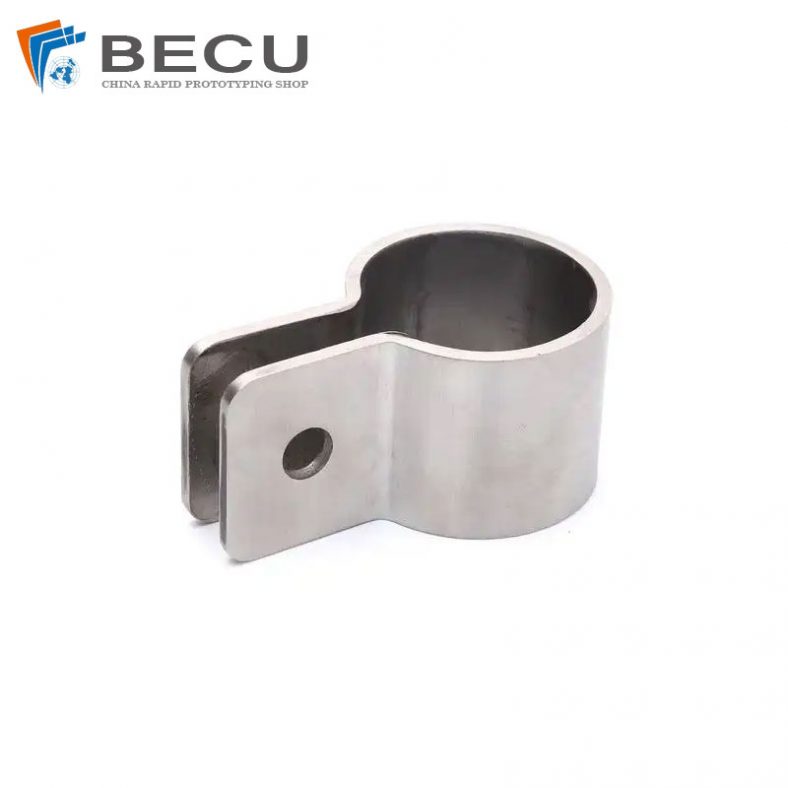

Titanium Deep Drawing Stamping
Titanium deep drawing stamping is a specialized manufacturing process used to shape titanium metal into intricate and precise components through the application of high-pressure forces. The process involves the use of a die and punch mechanism to deform the metal sheet into a desired shape without significantly altering its material properties. Deep drawing is particularly beneficial for materials such as titanium, which are known for their strength, corrosion resistance, and light weight, making them ideal for aerospace, medical, and industrial applications.
Titanium, a highly reactive metal, presents unique challenges during deep drawing. Its tendency to form a thin oxide layer on the surface, its low thermal conductivity, and high strength-to-weight ratio necessitate specific process adaptations. Deep drawing of titanium components requires advanced knowledge of material properties, tooling design, lubrication techniques, and precise control over the forming parameters.
This process is distinct from traditional stamping or pressing due to the complex geometries and deep cavities it produces. It plays a crucial role in the production of parts such as titanium aerospace components, medical implants, automotive parts, and consumer goods that require high performance and reliability.
Titanium Alloys Used in Deep Drawing Stamping
Titanium alloys are commonly used in deep drawing stamping due to their exceptional properties, including high strength-to-weight ratio, corrosion resistance, and good formability. However, not all titanium alloys are suitable for deep drawing due to differences in their mechanical properties, work-hardening behavior, and formability. Selecting the right alloy is critical for ensuring the success of deep drawing operations, as titanium’s unique characteristics, such as its high strength, low thermal conductivity, and tendency to work-harden, can present challenges during forming.
Titanium alloys are broadly classified into three categories: alpha alloys, beta alloys, and alpha-beta alloys. These categories differ in their microstructure and the properties they impart to the material, making some alloys more suitable for specific deep drawing applications than others.
1. Alpha Alloys
Alpha titanium alloys are characterized by a microstructure consisting primarily of the alpha phase of titanium, which is the stable hexagonal close-packed (HCP) phase at lower temperatures. These alloys have low to moderate strength but excellent formability, corrosion resistance, and weldability. Because of these properties, alpha alloys are widely used in applications that require good machinability and formability during deep drawing.
Ti-6Al-4V (Grade 5):
Ti-6Al-4V, also known as Grade 5 titanium, is the most commonly used titanium alloy for deep drawing applications. It is an alpha-beta alloy, containing 6% aluminum and 4% vanadium. Ti-6Al-4V offers an excellent balance of strength, ductility, and corrosion resistance, making it suitable for a wide range of deep drawing applications, particularly in aerospace, medical, and automotive industries. Its good formability makes it an ideal choice for producing complex shapes like titanium aerospace components, medical implants, and high-performance automotive parts. However, due to its moderate strength, Ti-6Al-4V alloy requires careful control of the forming process to avoid issues like work hardening, which could lead to cracking or surface defects.
Ti-6Al-2Sn-4Zr-6Mo:
This is another popular alpha-beta alloy that is used for deep drawing in applications requiring high strength and good oxidation resistance. It contains 6% aluminum, 2% tin, 4% zirconium, and 6% molybdenum. This alloy is used primarily in the aerospace industry for parts that are subjected to high-temperature environments and require excellent fatigue resistance. While it is stronger than Ti-6Al-4V, it retains relatively good formability, making it suitable for deep drawing applications where these properties are needed.
Ti-3Al-2.5V (Grade 9):
Ti-3Al-2.5V is a commercially pure titanium alloy with 3% aluminum and 2.5% vanadium. It has excellent corrosion resistance and is often used in aerospace and medical applications. Its strength is lower than Ti-6Al-4V, but its excellent ductility and formability make it an attractive option for deep drawing, particularly when the parts require intricate shapes or large deep draws.
2. Beta Alloys
Beta titanium alloys are characterized by a microstructure that consists primarily of the beta phase, which is a body-centered cubic (BCC) structure. Beta alloys generally exhibit higher strength and lower formability compared to alpha alloys, but they can be heat-treated to increase their strength further. These alloys are more difficult to form through deep drawing than alpha alloys, but they can be useful in certain applications where strength is more critical than formability.
- Ti-10V-2Fe-3Al (Grade 19):
Ti-10V-2Fe-3Al is a high-strength beta titanium alloy used in applications that require superior strength and resistance to fatigue, such as in aerospace and marine environments. This alloy contains 10% vanadium, 2% iron, and 3% aluminum, and while it offers excellent mechanical properties, it is not as formable as alpha or alpha-beta alloys. Deep drawing of this alloy requires careful control of temperature and strain rate, as it is prone to work hardening and cracking under excessive strain. - Ti-15V-3Cr-3Al-3Sn (Grade 15):
Ti-15V-3Cr-3Al-3Sn is another beta alloy used in deep drawing applications that require high strength and resistance to corrosion. This alloy has a composition of 15% vanadium, 3% chromium, 3% aluminum, and 3% tin, and is commonly used in the aerospace industry for components that must withstand extreme conditions. While Ti-15V-3Cr-3Al-3Sn exhibits excellent strength-to-weight ratio and fatigue resistance, its lower formability compared to alpha and alpha-beta alloys makes it more challenging to process during deep drawing.
3. Alpha-Beta Alloys
Alpha-beta titanium alloys combine the characteristics of both alpha and beta phases. These alloys offer a balance of strength, ductility, and good formability, making them ideal for a wide range of deep drawing applications. The presence of both phases allows the alloy to be heat-treated for enhanced mechanical properties, including improved strength and toughness.
- Ti-5Al-2.5Sn:This alloy is a medium-strength alpha-beta titanium alloy that is widely used in the aerospace and chemical industries for parts such as airframes, structural components, and heat exchangers. Ti-5Al-2.5Sn has good formability, making it suitable for deep drawing, and it can be heat-treated for increased strength. The alloy also exhibits good resistance to oxidation and corrosion, which is a crucial consideration in aerospace and other high-performance applications.
- Ti-6Al-2Sn-4Zr-2Mo:Ti-6Al-2Sn-4Zr-2Mo is an alpha-beta alloy that provides a higher level of strength than Ti-6Al-4V but retains good formability. It is used in aerospace applications where parts need to withstand high stresses and temperatures, such as turbine engine components. The combination of strength, ductility, and excellent high-temperature performance makes this alloy ideal for deep drawing, particularly for parts that need to maintain dimensional integrity under extreme conditions.
- Ti-3Al-8V-6Cr-4Zr-4Mo (Grade 12):Grade 12 titanium is an alpha-beta alloy that offers a good balance of strength and formability. It is often used in applications where corrosion resistance is critical, such as in the chemical processing industry and in the production of heat exchangers and reactors. Grade 12 titanium can be successfully deep drawn into complex shapes due to its excellent combination of formability and mechanical properties.
Titanium Deep Drawing Stamping – Deep Drawn For Titanium Alloy
Each titanium alloy presents unique challenges and benefits, and careful consideration must be given to the specific requirements of the deep drawing process. By selecting the appropriate alloy and optimizing the stamping process parameters, manufacturers can achieve high-quality titanium components that meet the demanding requirements of modern engineering applications.
Certified to ISO 9001:2015 standards, our capabilities encompass the precision manufacturing of parts with dimensions up to 24 inches in length, 50 inches in width, and a maximum thickness of 0.500 inches, maintaining tight tolerances of ±0.005 inches. Key features include surface enhancements such as coatings, countersinking, embossing, enameling, heat treatment, and ornamental detailing, as well as functional refinements like threading, tapping, and strain relief.
Our advanced manufacturing techniques include pressing, shearing, coining, forming, perforating, sheet metal fabrication, and CNC machining.
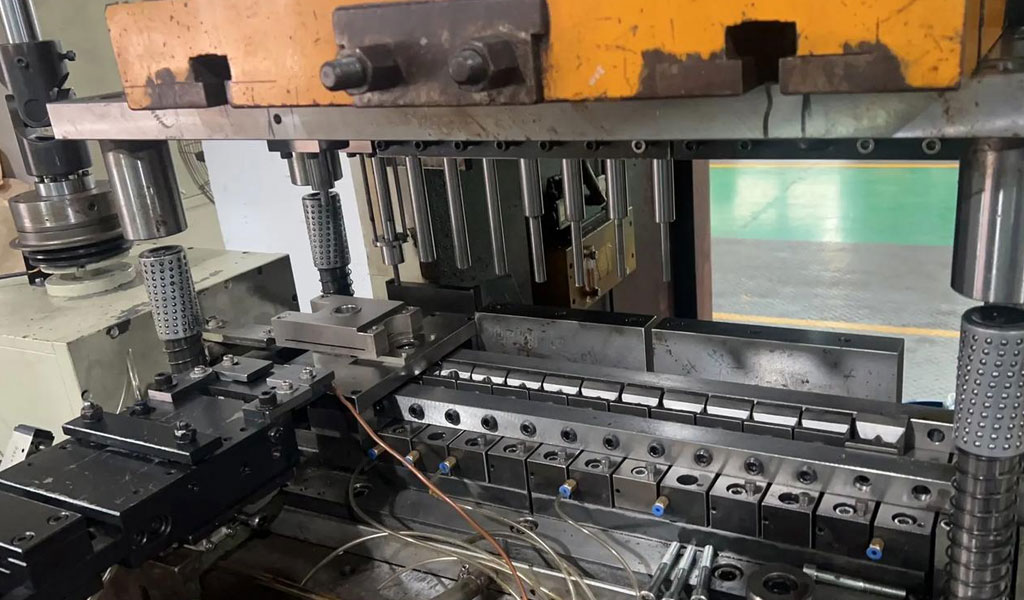
Complementary services extend to surface finishing processes such as plating, anodizing, powder coating, and E-coating, alongside post-processing operations like annealing, stress relieving, vibratory deburring, and tumbling. Additionally, we provide assembly, kitting, painting, riveting, inserting, and welding services, ensuring a comprehensive solution tailored to meet complex manufacturing demands.
Our Parts Case Studies Gallery Of Titanium Deep Drawing
We perform an efficient, accurate, and cost-effective process in-house to provide superior product results for your Titanium deep drawing.Whether you require punching Titanium pieces or custom Titanium parts, we can easily help you. With our expertise in precision Titanium deep drawing and the ability to integrate external combined processes, we can ensure the best performance for your deep drawing Titanium projects.