

Shear modulus, denoted typically as G, is a key parameter in the study of solid mechanics, representing the stiffness of a material under shear deformation. It is defined as the ratio of shear stress (τ) to shear strain (γ) within the elastic limit of a material, expressed mathematically as G = τ / γ.
This property is one of the elastic constants alongside Young’s modulus (E) and Poisson’s ratio (ν), and it plays a critical role in understanding how materials respond to forces that cause one layer to slide past another without changing the volume. The shear modulus is particularly significant in engineering design, materials science, and geophysics, as it governs the behavior of structures under torsion, bending, and seismic waves.
The concept of shear modulus emerges from the broader framework of elasticity theory, which describes how materials deform and return to their original shape when subjected to external forces. Unlike Young’s modulus, which measures tensile or compressive stiffness, shear modulus specifically addresses deformation due to forces applied parallel to a surface. For isotropic materials—those with uniform properties in all directions—the shear modulus is related to Young’s modulus and Poisson’s ratio by the equation G = E / [2(1 + ν)]. This relationship highlights the interdependence of elastic properties and provides a means to calculate G when direct measurement is impractical.
Theoretical Foundations of Shear Modulus
Shear modulus originates from the microscopic interactions within a material’s atomic or molecular structure. In crystalline solids, such as metals, the resistance to shear arises from the lattice’s ability to resist displacement of atomic planes. In amorphous materials like glasses or polymers, it stems from the entanglement of molecular chains or the rigidity of the disordered network. The shear modulus is a second-rank tensor in anisotropic materials, such as single crystals or composites, meaning its value depends on the direction of applied shear relative to the material’s symmetry axes. For simplicity, however, most practical applications assume isotropy, allowing G to be treated as a scalar quantity.
The physical significance of shear modulus can be understood through Hooke’s law in shear form: τ = Gγ. Here, shear stress (τ) is the force per unit area applied parallel to the surface, and shear strain (γ) is the resulting angular deformation, typically measured in radians. The proportionality constant G thus quantifies the material’s rigidity. For small deformations, this relationship holds within the elastic regime, beyond which plastic deformation or failure occurs. The transition from elastic to plastic behavior depends on the material’s yield strength, a property closely tied to its shear modulus.
Measurement Techniques
Determining the shear modulus experimentally involves applying a controlled shear stress and measuring the resultant strain. Several methods exist, each suited to specific material types and conditions:
- Torsion Testing: One of the most common techniques, torsion testing involves twisting a cylindrical or prismatic specimen and measuring the angle of twist. For a circular rod of length L and radius r, subjected to a torque T, the shear modulus is calculated as G = (T L) / (J θ), where J is the polar moment of inertia and θ is the angle of twist in radians. This method is widely used for metals and rigid polymers due to its precision and direct applicability to torsional stress scenarios.
- Dynamic Mechanical Analysis (DMA): DMA applies oscillatory shear to a sample and measures its response, often as a function of frequency or temperature. This technique is particularly valuable for viscoelastic materials like rubbers and plastics, where G may vary with time or environmental conditions. The storage modulus (G’) obtained from DMA approximates the elastic shear modulus in the linear viscoelastic region.
- Ultrasonic Wave Propagation: In this non-destructive method, shear waves are transmitted through a material, and their velocity (v_s) is measured. The shear modulus is then derived from the relationship G = ρ v_s^2, where ρ is the material’s density. This approach is prevalent in geophysics for studying Earth’s crust and in materials science for brittle solids like ceramics.
- Indentation Testing: Nanoindentation or microindentation can estimate G by analyzing the material’s response to a localized shear-inducing load. While less direct than torsion, this method is useful for thin films and coatings where bulk testing is impractical.
Each method has advantages and limitations, influenced by sample geometry, material homogeneity, and the desired precision. For instance, torsion testing excels with large, uniform specimens, while ultrasonic methods suit in-situ measurements.
Applications of Shear Modulus
Shear modulus finds extensive use across disciplines. In structural engineering, it informs the design of beams, shafts, and columns subjected to twisting or lateral forces. For example, the torsional rigidity of a shaft is directly proportional to G, impacting the performance of machinery like turbines or automotive drive trains. In seismology, shear modulus governs the propagation of S-waves (secondary waves), which shear the ground perpendicular to their travel direction, aiding in the modeling of earthquake dynamics.
In materials science, G distinguishes ductile from brittle materials. Metals like steel exhibit high shear moduli (e.g., ~80 GPa), reflecting their resistance to shear, while elastomers like rubber have low values (e.g., ~0.0003 GPa), indicating flexibility. Composites, such as carbon-fiber-reinforced polymers, display anisotropic shear moduli, necessitating careful orientation in design.
Comparative Data Across Materials
To illustrate the diversity of shear modulus values, the following tables compare G for various material classes, alongside related properties like density and Young’s modulus. These values are approximate, as G can vary with temperature, strain rate, and manufacturing processes.
| Material | Shear Modulus (G, GPa) | Young’s Modulus (E, GPa) | Poisson’s Ratio (ν) | Density (ρ, kg/m³) |
|---|---|---|---|---|
| Steel (mild) | 79 | 210 | 0.30 | 7850 |
| Aluminum | 26 | 70 | 0.33 | 2700 |
| Copper | 48 | 130 | 0.34 | 8960 |
| Titanium | 44 | 116 | 0.32 | 4500 |
| Tungsten | 161 | 411 | 0.28 | 19250 |
| Material | Shear Modulus (G, GPa) | Young’s Modulus (E, GPa) | Poisson’s Ratio (ν) | Density (ρ, kg/m³) |
|---|---|---|---|---|
| Polyethylene (HD) | 0.4 | 1.0 | 0.40 | 950 |
| Nylon 6 | 1.2 | 3.0 | 0.39 | 1140 |
| Rubber (natural) | 0.0003 | 0.01 | 0.49 | 920 |
| Polystyrene | 1.1 | 3.0 | 0.35 | 1050 |
| Material | Shear Modulus (G, GPa) | Young’s Modulus (E, GPa) | Poisson’s Ratio (ν) | Density (ρ, kg/m³) |
|---|---|---|---|---|
| Alumina (Al₂O₃) | 150 | 380 | 0.23 | 3950 |
| Granite | 25 | 60 | 0.25 | 2700 |
| Sandstone | 10 | 25 | 0.30 | 2300 |
| Diamond | 478 | 1140 | 0.10 | 3510 |
These tables demonstrate the vast range of shear modulus values, from the near-incompressible rigidity of diamond to the softness of rubber. The interplay between G, E, and ν is evident, with higher Poisson’s ratios reducing G relative to E.
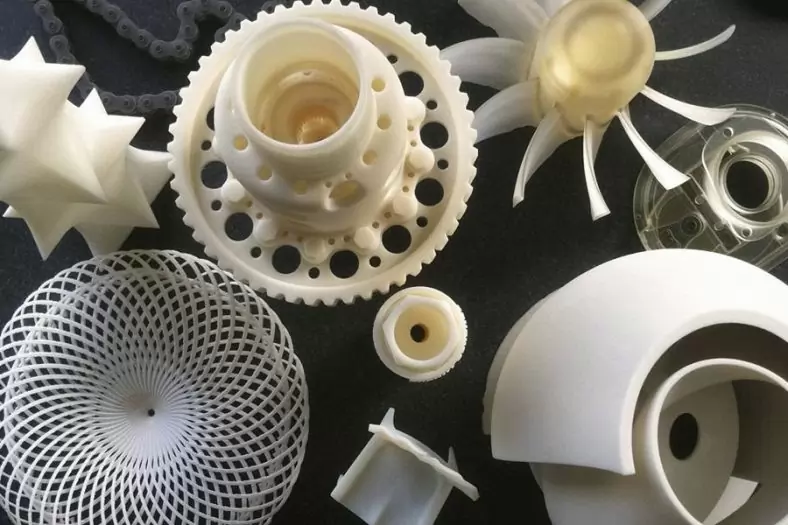
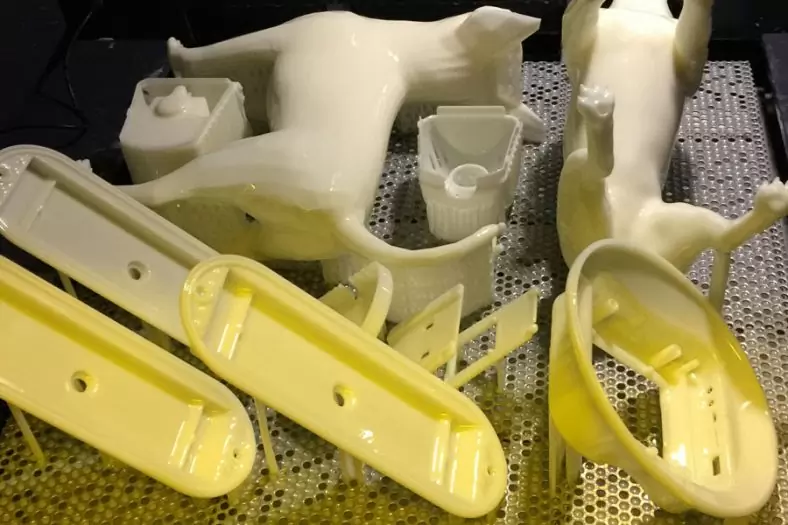
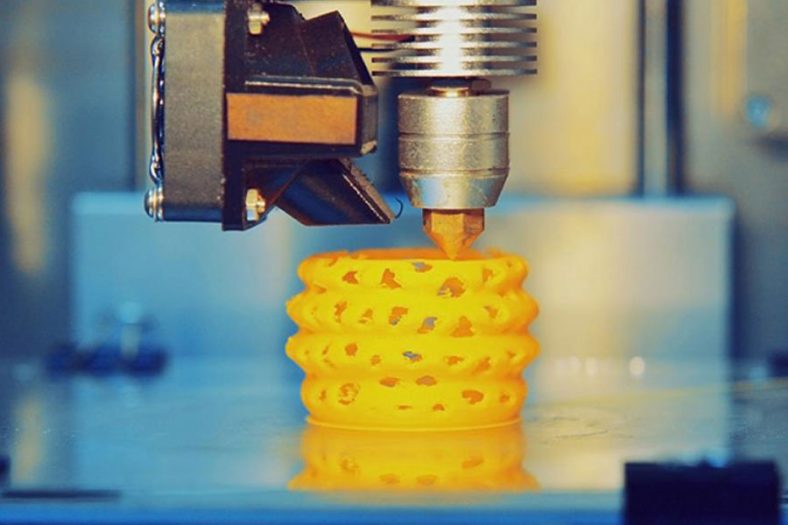

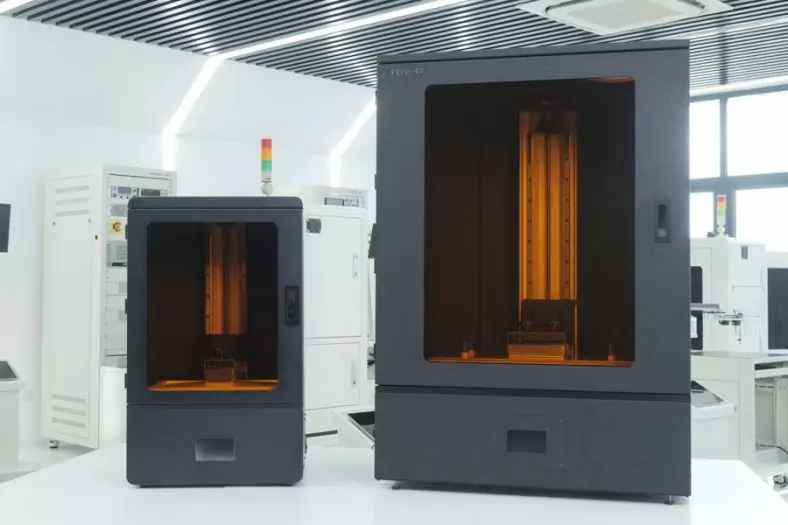



The Detail Of BE-CU 3D Printing Company

BE-CU.COM offers online 3D printing services for rapid prototyping and production in volume. Our clients are across a wide variety of industries and companies, including automotive, construction, aerospace, defense, electronics, machinery, industrial automation, medical, healthcare, consumer production, oil & gas, etc. Accelerate your product development and manufacturing process with our industry-leading metal & plastic 3D printing service and 3D printed parts. We’ll find the best 3D printing solution for your projects, to lower your cost and shorten the lead time based on your needs, while maintaining the quality. From 3D prototyping to end-use parts production, multiple materials are available for custom 3D printing parts. Need an alternative to the traditional solution? Submit your 3D CAD file to get an online quotation quickly. Our 3D printing service ensures accuracy and speed. We can help you choose the most appropriate technology and material to match your applications or request.
-

FDM 3D Printing Ultra-High Voltage Strong Electrical Connector
-

3D Printed Jet Engine Model
-
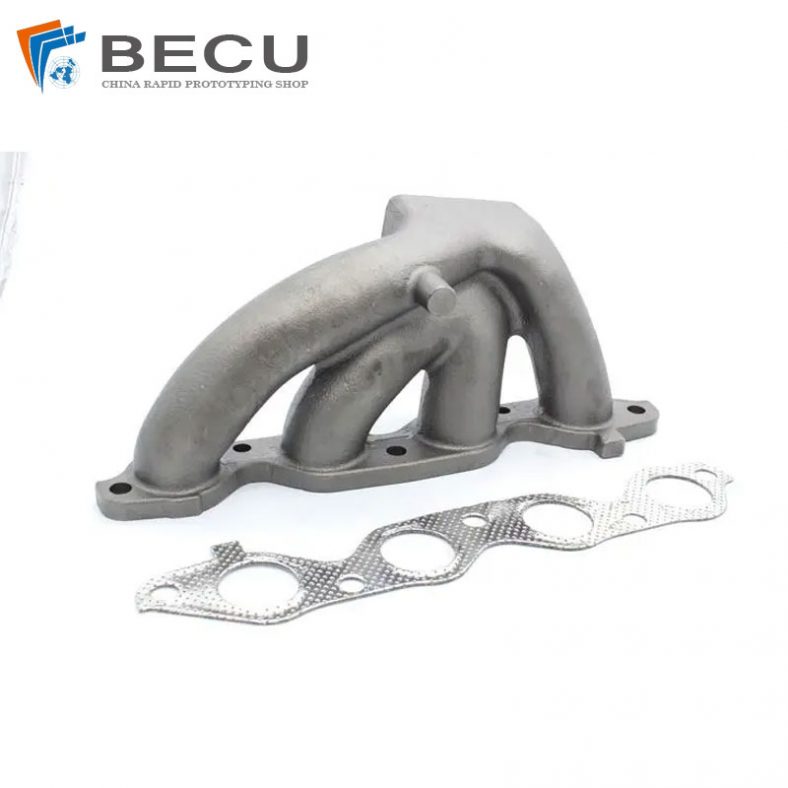
3D Printed Inconel Exhaust Manifold
-

3D Printed Black Myth: Wukong Model
-

Omni-Directional Surgical Planning Medical Models
-

3D Printing Pool Pressure Cleaner Parts and Accessories
-

Nylon 3D Printed Size 5 Basketball
-

Black Nylon Medical Threaded Screw By MJF 3D Printing