
Injection molding is a widely utilized manufacturing process for producing precise plastic parts in large volumes. The process involves injecting molten plastic into a mold cavity, where it cools and solidifies into the desired shape. However, certain part geometries, such as undercuts, side holes, or complex features, cannot be formed using a simple two-part mold that opens and closes along a single axis. To address these challenges, side actions—mechanical components within the mold—are employed to create these features by moving perpendicularly or at an angle to the mold’s primary parting line. This article provides a comprehensive exploration of the various types of injection molding side actions, their mechanisms, applications, design considerations, advantages, limitations, and comparative analyses, ensuring a thorough understanding of their role in modern manufacturing.

Injection Molding Side Actions
Side actions are critical in injection molding when a part’s design includes features that prevent straightforward ejection from a standard mold.
These features, often referred to as undercuts, include internal or external threads, side holes, grooves, or protrusions that lie outside the mold’s primary line of draw. A side action is a movable component within the mold that forms these features during the injection process and retracts to allow part ejection.
The implementation of side actions increases mold complexity, cost, and cycle time but enables the production of intricate parts that would otherwise require secondary operations or be infeasible to mold.Side actions can be actuated mechanically, hydraulically, or pneumatically, depending on the mold design and production requirements. The choice of side action type depends on factors such as part geometry, material properties, production volume, and cost constraints. This article categorizes side actions into their primary types—core pulls, lifters, collapsible cores, unscrewing mechanisms, and sliding blocks—and examines their mechanics, applications, and trade-offs in detail.
Core Pulls
Definition and Mechanism
Core pulls, also known as side cores or sliding cores, are among the most common side action mechanisms in injection molding. A core pull consists of a movable core or insert that slides into the mold cavity to form an undercut or side feature during injection and retracts before the mold opens for part ejection. The core is typically actuated by a hydraulic or pneumatic cylinder, though mechanical systems using cams or springs are also used in simpler designs.
The core pull mechanism operates perpendicularly or at an angle to the mold’s parting line. During the molding cycle, the core is positioned within the cavity to shape the undercut feature. After the plastic cools, the core retracts, allowing the mold to open and the part to be ejected without interference. Core pulls are versatile and can form features such as side holes, slots, or recesses.
Applications
Core pulls are widely used in industries such as automotive, consumer electronics, and medical device manufacturing, where parts often require precise side features. For example, in automotive applications, core pulls are used to create mounting holes or clips in dashboard components. In medical devices, they form ports or connectors in syringe bodies. Their ability to handle a wide range of undercut geometries makes them suitable for both low- and high-volume production.
Design Considerations
Designing a mold with core pulls requires careful consideration of several factors:
- Core Alignment: Precise alignment is critical to prevent flash (excess plastic leakage) or damage to the mold.
- Actuation Mechanism: Hydraulic or pneumatic systems provide reliable force but increase mold complexity, while mechanical systems are simpler but less robust for large or complex cores.
- Material Selection: The core material must withstand repeated cycles, high injection pressures, and potential abrasion from the plastic resin.
- Cooling: Core pulls often require internal cooling channels to maintain consistent mold temperatures and prevent defects like warping.
Advantages and Limitations
Core pulls offer significant advantages, including their versatility and ability to form complex undercuts without secondary operations. They are relatively straightforward to integrate into mold designs and can be adapted to various part sizes and shapes. However, core pulls increase mold cost due to the need for actuation systems and precise machining. They also extend cycle times, as the core must move into position and retract during each cycle. Additionally, maintenance requirements are higher due to the moving components, which are subject to wear.
Lifters
Definition and Mechanism
Lifters are side action mechanisms designed to form internal undercuts or features that are not aligned with the mold’s primary parting line. Unlike core pulls, which typically move perpendicularly to the parting line, lifters move at an angle, combining vertical and lateral motion. This angled motion allows lifters to form undercuts inside the part, such as internal ribs, hooks, or clips, while still permitting ejection.
A lifter consists of a movable component mounted on an angled rod or guide. During the molding cycle, the lifter is positioned to form the undercut. As the mold opens, the lifter slides along its angled path, moving both upward and outward to clear the undercut and allow part ejection. Lifters are typically actuated mechanically by the mold’s opening motion, though hydraulic or pneumatic systems can be used for more complex designs.
Applications
Lifters are commonly used in parts with internal features that require flexibility in design, such as snap-fit components in consumer electronics or clips in automotive interiors. For example, a plastic enclosure for an electronic device may use lifters to form internal snap features that secure a circuit board. Lifters are also prevalent in packaging, where they create features like tamper-evident seals.
Design Considerations
Key considerations for lifter design include:
- Angle of Motion: The lifter’s angle must be optimized to clear the undercut without damaging the part or mold. Typical angles range from 5 to 15 degrees.
- Lifter Stability: The lifter must be robust to withstand injection pressures and repeated cycles without deflecting or binding.
- Part Ejection: The lifter’s motion must be synchronized with the mold’s ejection system to prevent part distortion.
- Surface Finish: The lifter’s contact surfaces must be polished to minimize friction and ensure smooth part release.
Advantages and Limitations
Lifters are highly effective for internal undercuts, offering a compact solution that integrates well with standard mold designs. They are less complex than core pulls in terms of actuation, as they often rely on the mold’s natural opening motion. However, lifters are limited to smaller undercuts due to their angled motion, which restricts the depth and complexity of features they can form. They also introduce additional wear points in the mold, requiring regular maintenance.
Collapsible Cores
Definition and Mechanism
Collapsible cores are specialized side action mechanisms designed to form complex internal features, such as threads, grooves, or undercuts, that would otherwise trap the core and prevent part ejection. A collapsible core consists of a segmented core with movable sections that collapse inward after molding, reducing the core’s diameter and allowing the part to be ejected.
The collapsible core operates in two stages: during injection, the core is fully expanded to form the desired feature; after cooling, the segments collapse inward, typically via a mechanical or hydraulic mechanism, to release the undercut. This design is particularly suited for parts with deep internal undercuts or threads, such as bottle caps or medical device components.
Applications
Collapsible cores are widely used in applications requiring internal threads or complex internal geometries, such as in the production of plastic bottle caps, pipe fittings, or medical syringe barrels. They are particularly valuable in high-volume production, where eliminating secondary threading operations reduces costs.
Design Considerations
Designing collapsible cores involves several challenges:
- Segment Design: The core’s segments must collapse uniformly to avoid part distortion or mold damage.
- Actuation Precision: The collapse mechanism requires precise timing to ensure smooth operation and prevent binding.
- Material Durability: The core’s segments must withstand high injection pressures and repeated cycling.
- Cooling Efficiency: Internal cooling channels are critical to prevent overheating, which can lead to defects.
Advantages and Limitations
Collapsible cores enable the production of highly complex internal features without secondary operations, significantly reducing production costs for threaded or undercut parts. They are particularly effective for small- to medium-sized parts with deep undercuts. However, collapsible cores are among the most expensive and complex side action mechanisms, requiring precise engineering and maintenance. Their use is typically justified in high-volume production where cost savings from eliminating secondary operations outweigh the initial mold investment.
Unscrewing Mechanisms
Definition and Mechanism
Unscrewing mechanisms are side actions specifically designed to form threaded features, such as internal or external threads on plastic parts. Unlike collapsible cores, which collapse to release threads, unscrewing mechanisms rotate the core or mold component to unscrew the part, mimicking the motion of removing a screw from a threaded hole.
The unscrewing mechanism typically consists of a rotating core or cavity insert driven by a motor, gear system, or hydraulic actuator. During the molding cycle, the core forms the thread; after cooling, the core rotates to release the threaded feature, allowing the part to be ejected. Unscrewing mechanisms can be integrated into the mold or designed as standalone units for high-volume production.
Applications
Unscrewing mechanisms are essential for parts with precise threads, such as bottle caps, automotive fasteners, or medical device connectors. They are commonly used in industries where threaded components must meet strict dimensional tolerances and performance requirements.
Design Considerations
Key design considerations for unscrewing mechanisms include:
- Thread Geometry: The thread profile (e.g., pitch, depth, and angle) must be precisely matched to the core’s design.
- Rotational Speed: The unscrewing speed must be optimized to prevent thread damage or part distortion.
- Actuation System: Electric motors offer precise control, while hydraulic systems provide high torque for larger threads.
- Mold Integration: The unscrewing mechanism must be seamlessly integrated with the mold’s ejection system to ensure smooth operation.
Advantages and Limitations
Unscrewing mechanisms produce high-quality threads with excellent dimensional accuracy, eliminating the need for secondary threading operations. They are highly reliable for high-volume production and can handle a wide range of thread sizes and profiles. However, they significantly increase mold complexity and cost, requiring sophisticated actuation systems and precise engineering. Maintenance is also a concern, as rotating components are prone to wear.
Sliding Blocks
Definition and Mechanism
Sliding blocks, also known as cam actions or angle pins, are side action mechanisms that use a sliding component to form external undercuts or features. Unlike core pulls, which typically form side holes or recesses, sliding blocks are used for larger or more complex external features, such as protrusions, ribs, or slots.
The sliding block is actuated by an angled pin or cam that engages as the mold opens, causing the block to slide laterally and clear the undercut. The block returns to its original position when the mold closes for the next cycle. Sliding blocks are typically mechanically actuated, leveraging the mold’s opening and closing motion, though hydraulic or pneumatic systems can be used for larger or more complex designs.
Applications
Sliding blocks are used in applications requiring external undercuts, such as automotive body panels, appliance housings, or consumer product enclosures. For example, a plastic housing for a power tool may use sliding blocks to form mounting bosses or ventilation slots.
Design Considerations
Designing sliding blocks requires attention to:
- Cam Angle: The angle of the actuating pin or cam must be optimized to ensure smooth sliding without excessive wear.
- Block Stability: The sliding block must be robust to withstand injection pressures and maintain alignment.
- Surface Contact: The block’s contact surfaces must be polished to minimize friction and ensure clean part release.
- Mold Space: Sliding blocks require additional space within the mold, which can limit their use in compact designs.
Advantages and Limitations
Sliding blocks are effective for large or complex external undercuts, offering a robust and reliable solution for a wide range of applications. They are relatively simple to actuate, as they often rely on the mold’s natural motion. However, sliding blocks increase mold size and complexity, which can raise costs. They are also less versatile than core pulls for smaller or internal features.
Comparative Analysis of Side Action Mechanisms
To provide a clearer understanding of the various side action mechanisms, the following table compares their key characteristics, applications, and trade-offs.
| Mechanism | Primary Function | Actuation Method | Typical Applications | Advantages | Limitations |
|---|---|---|---|---|---|
| Core Pulls | Form side holes, slots, or recesses | Hydraulic, pneumatic, or mechanical | Automotive clips, medical device ports | Versatile, widely applicable, adaptable to various geometries | Increases mold cost and cycle time, requires maintenance |
| Lifters | Form internal undercuts (e.g., snap fits, ribs) | Mechanical (mold motion), hydraulic | Consumer electronics, packaging | Compact, integrates with mold motion, effective for internal features | Limited to smaller undercuts, potential for wear |
| Collapsible Cores | Form complex internal threads or undercuts | Mechanical or hydraulic | Bottle caps, medical syringe barrels | Eliminates secondary operations, suitable for deep undercuts | High cost, complex design, limited to small- to medium-sized parts |
| Unscrewing Mechanisms | Form precise internal or external threads | Motor-driven, hydraulic, or gear-based | Bottle caps, automotive fasteners | High thread accuracy, reliable for high-volume production | Complex and costly, high maintenance for rotating components |
| Sliding Blocks | Form external undercuts or protrusions | Mechanical (cam/angle pin), hydraulic | Automotive panels, appliance housings | Robust for large external features, simple actuation via mold motion | Increases mold size, less versatile for small or internal features |
Advanced Design and Engineering Considerations
Material Selection for Side Actions
The choice of materials for side action components is critical to ensure durability and performance. Common materials include:
- Tool Steel (e.g., P20, H13): Offers high strength and wear resistance, suitable for high-volume production.
- Stainless Steel: Used for corrosive resins or environments requiring high cleanliness, such as medical molding.
- Beryllium Copper: Provides excellent thermal conductivity for cooling, often used in core pulls or lifters with internal cooling channels.
Material selection must balance cost, durability, and thermal properties. For example, high-volume production may justify the use of premium tool steels, while low-volume runs may use more cost-effective materials.
Actuation Systems
The actuation system for side actions significantly impacts mold performance. Hydraulic systems offer high force and precision but require external power sources and increase mold complexity. Pneumatic systems are simpler and cleaner but provide less force, limiting their use to smaller side actions. Mechanical systems, such as cams or springs, are cost-effective and integrate with the mold’s motion but are less versatile for complex movements.
Mold Maintenance and Lifecycle
Side actions introduce moving components that are subject to wear, requiring regular maintenance to ensure consistent performance. Key maintenance tasks include:
- Lubrication: Moving components, such as lifters or sliding blocks, require regular lubrication to minimize friction and wear.
- Inspection: Regular inspection of core pulls, collapsible cores, and unscrewing mechanisms is necessary to detect wear or misalignment.
- Replacement: Worn components, such as seals in hydraulic systems or segments in collapsible cores, must be replaced to maintain mold integrity.
Proper maintenance extends the mold’s lifecycle, which is critical for high-volume production where downtime can significantly impact costs.
Cost Implications
The inclusion of side actions increases mold design and manufacturing costs due to the need for precise machining, actuation systems, and additional components. Collapsible cores and unscrewing mechanisms are particularly expensive, often costing tens of thousands of dollars more than standard molds. However, these costs are often justified by the elimination of secondary operations, such as machining or threading, which can be labor-intensive and costly.
Industry Applications and Case Studies
Automotive Industry
The automotive industry extensively uses side actions to produce complex plastic components, such as dashboard panels, interior trim, and exterior body parts. Core pulls and sliding blocks are commonly used to form mounting holes, clips, and ventilation slots, while unscrewing mechanisms create threaded fasteners. For example, a dashboard component may use core pulls to form side mounting holes and lifters to create internal snap features for securing electronic modules.
Medical Device Manufacturing
Medical devices require high precision and cleanliness, making side actions critical for forming features like ports, connectors, and threads. Collapsible cores and unscrewing mechanisms are used to produce syringe barrels and vial caps with internal threads, while core pulls form side ports in catheter hubs. The use of stainless steel or beryllium copper ensures compatibility with medical-grade resins and stringent hygiene requirements.
Consumer Electronics
Consumer electronics rely on side actions to create compact, intricate parts, such as enclosures, buttons, and connectors. Lifters are commonly used to form snap-fit features in phone or laptop housings, while core pulls create side ports for charging or audio jacks. The high aesthetic requirements of consumer electronics necessitate polished side action surfaces to ensure flawless part finishes.
Packaging Industry
The packaging industry uses side actions to produce complex containers, such as bottle caps, tamper-evident seals, and dispensing nozzles. Unscrewing mechanisms and collapsible cores are critical for forming threads and undercuts in high-volume production, while lifters create internal features like snap-on lids. The ability to produce these features in a single molding operation reduces costs and improves production efficiency.
Conclusion:Future Trends in Side Action Technology
Side actions are indispensable in injection molding for producing parts with complex geometries that cannot be achieved with standard two-part molds. Core pulls, lifters, collapsible cores, unscrewing mechanisms, and sliding blocks each offer unique capabilities, enabling manufacturers to meet the demands of diverse industries, from automotive to medical devices. While side actions increase mold complexity and cost, their ability to eliminate secondary operations and produce intricate features in a single step makes them a critical tool in modern manufacturing.
Automation and Smart Molds
Advancements in automation and sensor technology are transforming side action mechanisms. Smart molds equipped with sensors can monitor the position, pressure, and wear of side actions in real-time, enabling predictive maintenance and reducing downtime. Automated actuation systems, such as servo-driven unscrewing mechanisms, offer greater precision and flexibility, allowing for faster cycle times and improved part quality.
Additive Manufacturing for Side Actions
Additive manufacturing (3D printing) is increasingly used to produce complex side action components, such as collapsible cores or custom lifters. This technology allows for rapid prototyping and the creation of intricate geometries that are difficult to achieve with traditional machining. While additive manufacturing is currently limited to low-volume or prototype molds, ongoing advancements in material strength and printing precision may expand its use in production molds.
Sustainable Materials and Processes
The push for sustainability in injection molding is influencing side action design. Manufacturers are exploring biodegradable and recycled resins, which may require modified side action materials or cooling systems to accommodate different thermal properties. Additionally, energy-efficient actuation systems, such as electric motors, are being adopted to reduce the environmental impact of side action molds.
The choice of side action depends on factors such as part geometry, production volume, material properties, and cost constraints. Advances in automation, additive manufacturing, and sustainable practices are poised to further enhance the capabilities of side actions, ensuring their continued relevance in the evolving field of injection molding. By understanding the mechanics, applications, and trade-offs of each side action type, manufacturers can optimize mold design and production processes to achieve high-quality, cost-effective parts.
The Detail Of BE-CU Plastic Injection Company
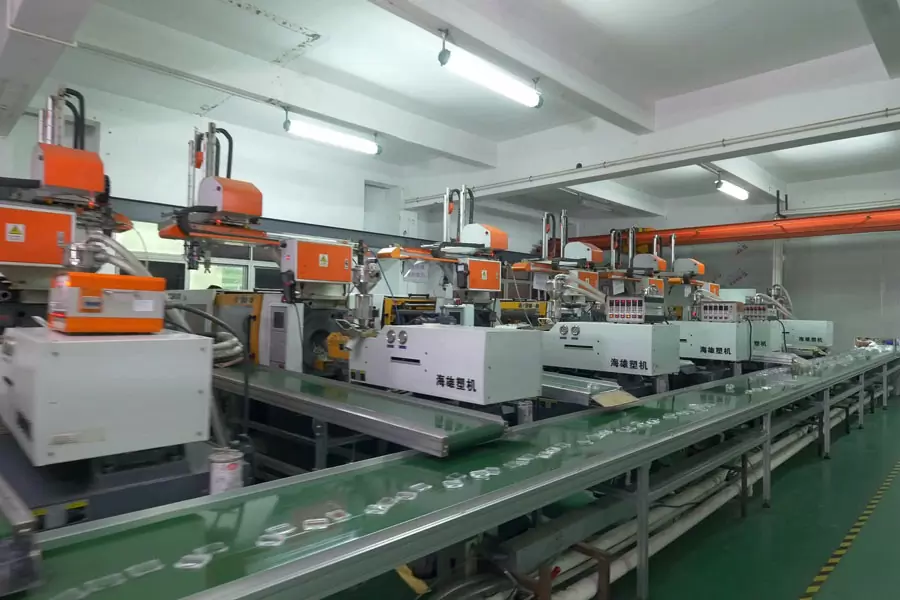
The core cooperative injection molding supplier has twelve 50T-200T injection molding machines, all of which are equipped with manipulators, mold temperature controllers, automatic assembly lines, and dust-free purification workshops. There are 4 automatic production lines in the oil spraying department: one 10,000-level automatic spraying production line (two sprays and two baking), 1 production line (one spray and one baking); 1 manual spraying production line, with a daily output of 150,000 pieces above. With brand-new professional technology, with an environmentally friendly anti-static, fully air-conditioned, dust-free workshop, the working environment is superior, the production equipment is complete, and the product testing equipment is perfect. Need mold making supplies for large quantities of production parts? Looking for a more cost effective and time efficient way of manufacturing parts? Don’t miss our injection molding services! At be-cu.com, we provide high quality and affordable injection molding for prototypes and production parts with quick turnaround times.
-

5 Axis CNC Machining Spiral Bevel Gear Mold
-
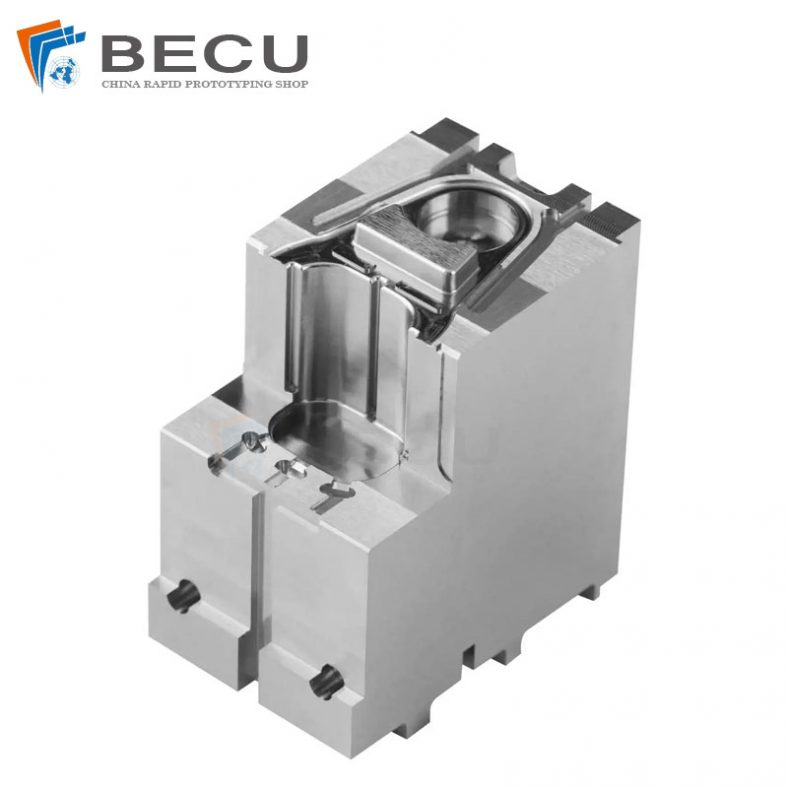
Small Precision Injection Molding Inserts
-
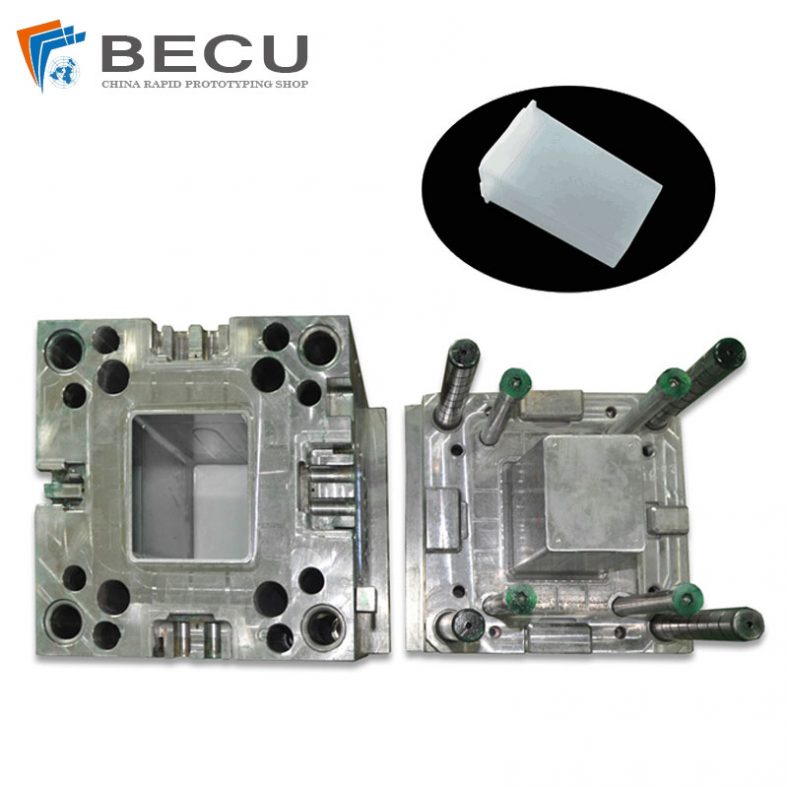
Plastic Storage Box Plastic Injection Mold
-
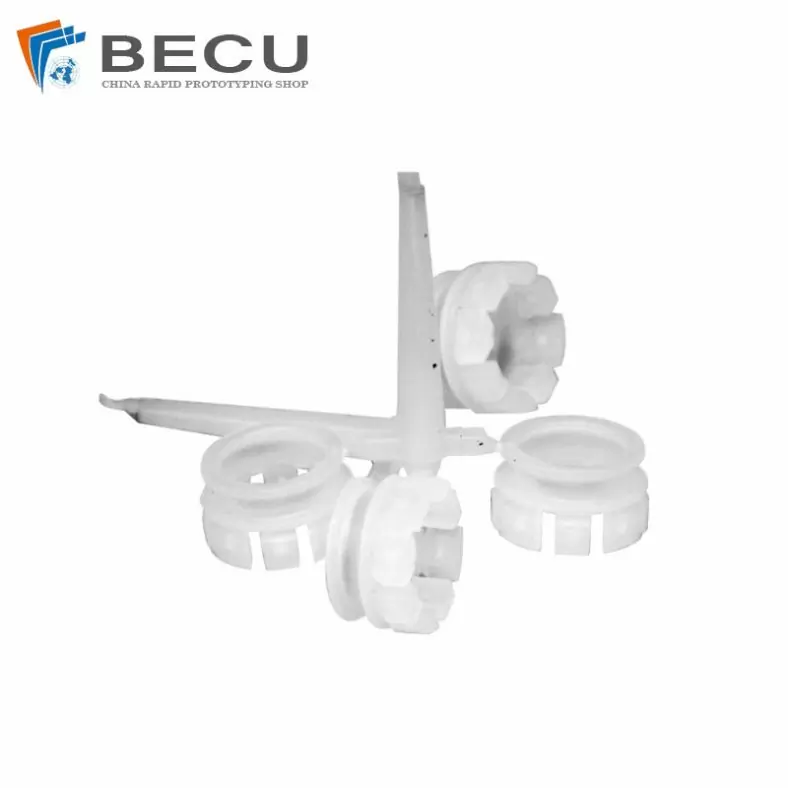
Injection Molding PE-UHMW Retaining Buckle And Ring
-
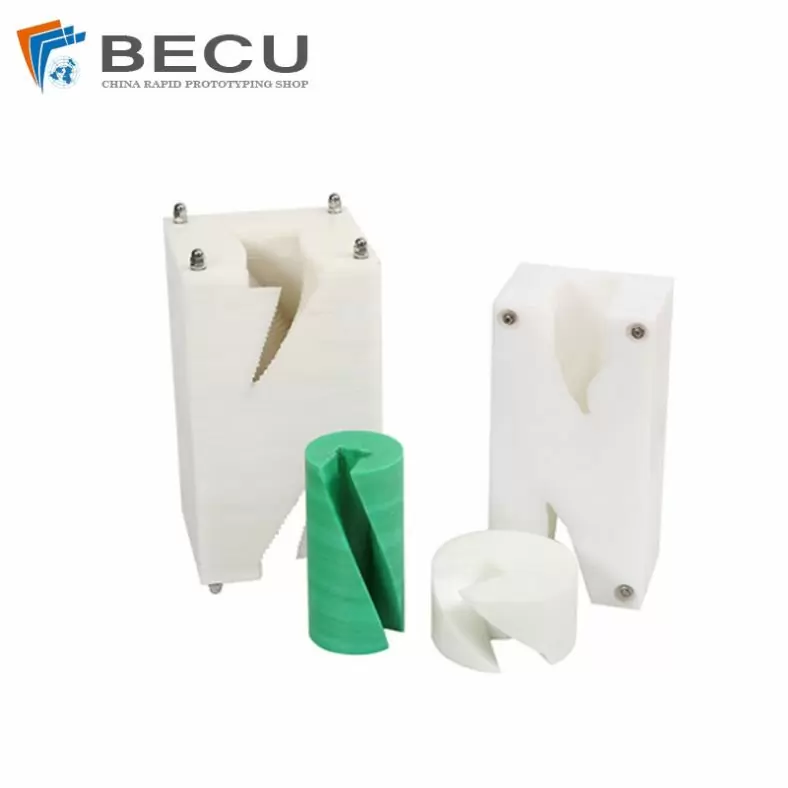
Cnc Machined UHMW-PE Bottle Turner
-
Shower Inclosure Sleeve By Plastic Injection
-
Injection Secret Security Machine Control Shell
-
Sewing Machine Industrial Control Shell By Plastic Injection