
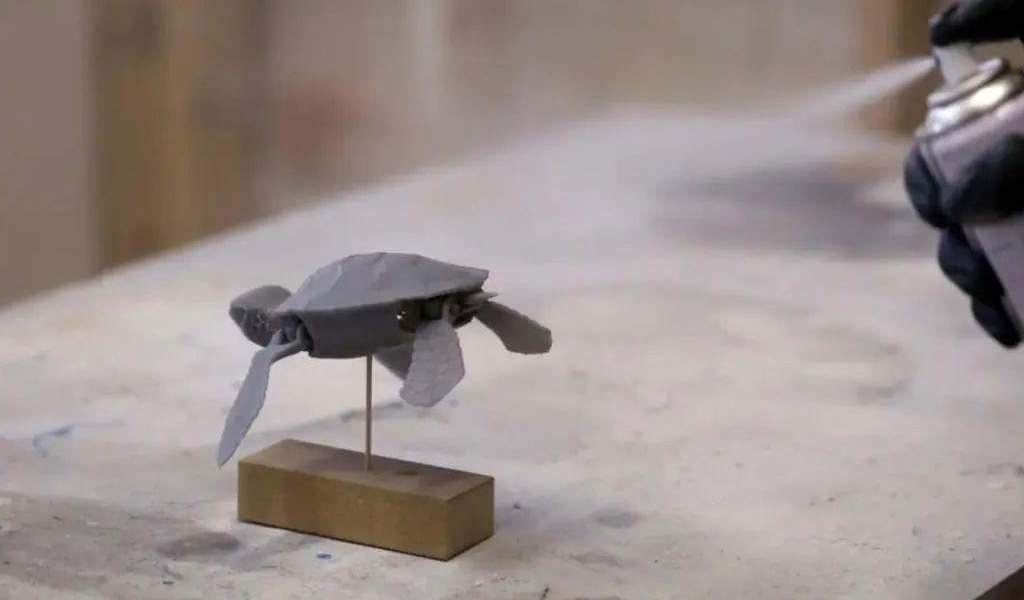
3D printing, also known as additive manufacturing, has revolutionized prototyping, manufacturing, and hobbyist creation by enabling the production of complex geometries directly from digital models. However, one persistent challenge in 3D printing, particularly with technologies such as fused deposition modeling (FDM), is achieving a smooth surface finish. The layer-by-layer construction process inherent to most 3D printing methods often results in visible layer lines, surface imperfections, and a rough texture that may not meet the aesthetic or functional requirements of the final part. Fortunately, a variety of post-processing techniques exist to smooth 3D-printed parts, each with its own advantages, limitations, and applications.
This article explores nine scientifically grounded methods to smooth 3D-printed parts for the best surface finish, delving into the principles, materials, processes, and comparative outcomes of each approach. Detailed tables are provided to facilitate a rigorous comparison of these techniques.
1. Sanding
Sanding is one of the most accessible and widely used methods for smoothing 3D-printed parts. This mechanical abrasion technique involves the use of abrasive materials, such as sandpaper, to physically remove surface irregularities and layer lines. Sanding is particularly effective for parts printed with thermoplastics like polylactic acid (PLA), acrylonitrile butadiene styrene (ABS), and polyethylene terephthalate glycol (PETG), though it can be applied to a broader range of materials with varying degrees of success.
The process begins with coarse-grit sandpaper (e.g., 80–120 grit) to address prominent layer lines and imperfections. As the surface becomes more uniform, progressively finer grits (e.g., 400, 800, up to 2000 grit) are employed to refine the finish. Wet sanding, where water or a lubricant is used, can reduce dust and improve the smoothness by minimizing scratches. For intricate geometries, sanding sticks, files, or rotary tools like Dremels with sanding attachments may be necessary.
The efficacy of sanding depends on several factors: the material hardness, the initial surface roughness (determined by layer height and print resolution), and the operator’s skill. For example, PLA, being relatively soft, sands easily but may require care to avoid overheating from friction, which can deform the part. ABS, while tougher, may resist sanding unless softened slightly with heat or solvents (see vapor smoothing below). Sanding is labor-intensive and less effective for parts with deep crevices or complex internal structures, where abrasive media cannot reach.
Scientific Considerations: The surface roughness (Ra) of a 3D-printed part, typically measured in micrometers (µm), can be reduced from an initial value of 10–25 µm (for a 0.2 mm layer height) to below 1 µm with meticulous sanding. Studies in materials science indicate that the removal rate follows Archard’s wear equation, where material removal is proportional to the applied pressure, sliding distance, and inversely proportional to material hardness. For thermoplastics, sanding also generates heat, potentially altering the polymer’s microstructure near the surface, which may affect mechanical properties like tensile strength.
Advantages: Sanding requires minimal equipment (sandpaper, water, and optional rotary tools), making it cost-effective and accessible. It offers precise control over the finish and is safe for most materials.
Limitations: The process is time-consuming, produces dust (unless wet sanding is used), and may not uniformly smooth complex geometries. Prolonged sanding can also thin or distort fine features.
2. Vapor Smoothing
Vapor smoothing is a chemical post-processing technique that uses solvent vapors to melt and redistribute the surface material of 3D-printed parts, effectively eliminating layer lines and creating a glossy, polished finish. This method is most commonly applied to ABS parts using acetone vapor, though other solvent-material pairs, such as dichloromethane for PLA or tetrahydrofuran (THF) for polyvinyl chloride (PVC), have been explored.
The process involves placing the 3D-printed part in a sealed chamber with a small amount of solvent, which is heated to produce vapor. The vapor softens the outer layer of the plastic, allowing surface tension to smooth out imperfections before the solvent evaporates or is vented. Exposure time, typically ranging from 10 minutes to an hour, must be carefully controlled to avoid over-melting, which can deform the part or reduce dimensional accuracy.
Scientific Principles: Vapor smoothing relies on the solubility of the polymer in the solvent, governed by the Hildebrand solubility parameter (δ). For ABS and acetone, the close match in solubility parameters (δ_ABS ≈ 20.0 MPa½, δ_acetone ≈ 19.7 MPa½) ensures effective surface dissolution. The process reduces surface roughness by redistributing polymer chains, effectively lowering the Ra value from 10–20 µm to as low as 0.5–2 µm, depending on exposure duration and vapor concentration. However, excessive solvent penetration can weaken intermolecular bonds, reducing the part’s mechanical strength.
Advantages: Vapor smoothing produces a uniform, glossy finish across complex geometries without manual labor. It is relatively fast and effective for ABS parts.
Limitations: The technique is material-specific (e.g., acetone does not work well with PLA), poses safety risks due to flammable and toxic solvents, and requires a controlled environment. Overexposure can compromise structural integrity or fine details.
| Material | Solvent | Solubility Parameter (MPa½) | Effectiveness | Safety Notes |
|---|---|---|---|---|
| ABS | Acetone | 19.7 | High | Flammable, ventilate well |
| PLA | Dichloromethane | 20.2 | Moderate | Toxic, use fume hood |
| PETG | Ethyl Acetate | 18.2 | Low | Limited smoothing effect |
| Polycarbonate | THF | 19.4 | High | Highly toxic, controlled use |
3. Epoxy Coating
Epoxy coating involves applying a thin layer of two-part epoxy resin to the surface of a 3D-printed part. Once cured, the epoxy fills in layer lines and surface voids, creating a smooth, durable finish. This method is versatile and can be used with nearly all 3D printing materials, including PLA, ABS, PETG, and even resin-based prints from stereolithography (SLA) or digital light processing (DLP).
The process begins with mixing the epoxy resin and hardener in the manufacturer-specified ratio, typically 1:1 or 2:1. The mixture is then brushed, sprayed, or dipped onto the part. For optimal results, the part may be pre-sanded to reduce major imperfections, though this is not always necessary. After application, the epoxy cures over several hours (typically 4–24 hours, depending on the formulation), forming a hard, glossy surface. Multiple coats can be applied for thicker finishes or additional smoothness.
Scientific Basis: Epoxy resins are thermosetting polymers that undergo crosslinking during curing, forming a rigid, chemically resistant layer. The viscosity of the uncured epoxy (typically 500–2000 cP) determines its ability to flow into surface irregularities, while curing shrinkage (often <2%) affects dimensional accuracy. Surface tension and wetting properties ensure uniform coverage, reducing Ra values to below 1 µm with proper application.
Advantages: Epoxy coating enhances both aesthetics and durability, offering resistance to moisture, chemicals, and abrasion. It is widely applicable and allows for custom finishes (e.g., matte or glossy).
Limitations: The process adds thickness (0.1–1 mm per coat), which may alter tolerances. It requires careful mixing and application to avoid bubbles or unevenness, and curing time can delay workflows.
4. Polishing with Compounds
Polishing with abrasive compounds is a refinement technique often used after sanding to achieve a mirror-like finish on 3D-printed parts. This method employs polishing pastes or liquids containing fine abrasives (e.g., aluminum oxide, diamond paste) applied with a cloth, buffing wheel, or rotary tool. It is particularly effective for harder materials like PETG, polycarbonate, or SLA resins, though it can be adapted for softer plastics with care.
The process involves applying the compound to the part and using a rotational or linear motion to abrade the surface. Coarser compounds (e.g., 5–10 µm particle size) remove minor scratches left by sanding, while finer compounds (e.g., 0.5–1 µm) produce a high-gloss finish. For thermoplastics, heat generation must be monitored to prevent melting.
Scientific Considerations: Polishing reduces surface roughness through micro-abrasion, following a logarithmic decrease in Ra with abrasive particle size. For instance, a part with an Ra of 2 µm after sanding can reach 0.1 µm with a 1 µm diamond paste. The process also introduces minor compressive stresses into the surface, potentially improving fatigue resistance.
Advantages: Polishing achieves an exceptional gloss and is ideal for transparent or aesthetic parts. It requires minimal material removal.
Limitations: It is labor-intensive, less effective on rough initial surfaces, and impractical for intricate geometries.
5. Heat Treatment (Annealing)
Heat treatment, or annealing, involves controlled heating of a 3D-printed part to soften its surface and reduce layer visibility. This method is most applicable to thermoplastics with defined glass transition temperatures (Tg), such as PLA (Tg ≈ 60°C), ABS (Tg ≈ 105°C), or nylon (Tg ≈ 50–70°C). The part is heated in an oven or hot air gun to a temperature below its melting point but above Tg, allowing polymer chains to relax and redistribute.
For example, PLA parts can be annealed at 70–90°C for 30–60 minutes, often with a sand or salt bath to support the part and prevent warping. The heat softens surface imperfections, reducing layer lines, though the effect is subtler than with vapor smoothing.
Scientific Principles: Annealing increases molecular mobility, reducing residual stresses from printing and smoothing the surface via viscous flow. However, it can also increase crystallinity in semi-crystalline polymers like PLA, altering mechanical properties (e.g., increasing brittleness). Surface roughness may decrease from 10–15 µm to 5–10 µm, depending on material and conditions.
Advantages: Heat treatment is simple, requires no chemicals, and can improve part strength in some cases.
Limitations: It risks deformation, shrinkage, or warping, particularly for thin-walled or unsupported parts. The smoothing effect is limited compared to other methods.
6. Tumbling
Tumbling is a mechanical smoothing technique that uses a rotating or vibrating container filled with abrasive media (e.g., ceramic chips, walnut shells, or plastic beads) to polish 3D-printed parts. The part is placed in the tumbler, and the continuous motion of the media against the surface gradually removes layer lines and imperfections.
Tumbling is effective for small, durable parts made from PLA, ABS, or nylon. The choice of media, tumbling duration (typically 2–24 hours), and machine type (rotary or vibratory) influence the outcome. Wet tumbling with water or a lubricant can enhance smoothness and reduce dust.
Scientific Basis: Tumbling follows principles of abrasive wear, where the kinetic energy of the media removes material proportional to its hardness and impact frequency. Surface roughness can decrease from 15 µm to 2–5 µm, though uniformity depends on part geometry.
Advantages: Tumbling is automated, hands-free, and effective for batch processing.
Limitations: It is slow, may round edges undesirably, and is less effective for large or fragile parts.
7. Chemical Dipping
Chemical dipping involves submerging a 3D-printed part in a liquid solvent to smooth its surface, a more aggressive variant of vapor smoothing. For ABS, acetone dipping for 5–30 seconds can produce a glossy finish, while PLA may be dipped in ethyl acetate or THF with caution. The part is quickly removed and allowed to dry, often with airflow to prevent solvent pooling.
Scientific Considerations: Dipping dissolves the outer polymer layer more rapidly than vapor smoothing, reducing Ra to 0.5–1 µm. However, solvent penetration can weaken the part’s structure, and dimensional changes are more pronounced.
Advantages: It is fast and effective for uniform smoothing.
Limitations: High risk of over-dissolution, safety hazards, and material specificity limit its use.
8. Resin Filling and Sanding
Resin filling combines the use of low-viscosity resins (e.g., UV-curable resins) with sanding. The resin is applied to fill layer lines, cured (often with UV light), and then sanded to a smooth finish. This method is ideal for SLA or DLP prints but can enhance FDM parts as well.
Scientific Basis: The resin’s low viscosity (50–200 cP) ensures penetration into surface defects, while curing locks the fill in place. Sanding refines the finish to an Ra below 1 µm.
Advantages: Excellent for detailed parts, with high control over the outcome.
Limitations: Requires multiple steps and UV equipment.
9. Electroplating
Electroplating deposits a thin metal layer (e.g., nickel, copper) onto a 3D-printed part, smoothing its surface and adding strength. The part must first be made conductive (e.g., via conductive paint) before being submerged in an electrolyte bath with an electric current applied.
Scientific Principles: Metal ions deposit onto the part’s surface, filling micro-imperfections and reducing Ra to 0.1–0.5 µm. The process enhances wear resistance and conductivity.
Advantages: Produces a durable, metallic finish.
Limitations: Complex setup, high cost, and limited to conductive bases.
Comparative Analysis
| Method | Ra Reduction (µm) | Time Required | Cost | Complexity | Material Compatibility |
|---|---|---|---|---|---|
| Sanding | 10–25 to <1 | 1–5 hr | Low | Low | High |
| Vapor Smoothing | 10–20 to 0.5–2 | 10–60 min | Medium | Medium | Medium (ABS, PC) |
| Epoxy Coating | 10–20 to <1 | 4–24 hr | Medium | Medium | High |
| Polishing | 2–5 to 0.1–1 | 1–3 hr | Low | Medium | High |
| Heat Treatment | 10–15 to 5–10 | 30–60 min | Low | Low | Medium (Thermoplastics) |
| Tumbling | 15–20 to 2–5 | 2–24 hr | Medium | Low | High |
| Chemical Dipping | 10–20 to 0.5–1 | 5–30 sec | Medium | High | Low (ABS, PLA) |
| Resin Filling | 10–20 to <1 | 2–6 hr | Medium | High | High |
| Electroplating | 10–20 to 0.1–0.5 | 1–3 hr | High | High | Medium (Conductive) |
Conclusion
Smoothing 3D-printed parts is a critical step in achieving professional-grade surface finishes, with each method offering unique trade-offs in terms of cost, time, complexity, and material compatibility. Sanding and epoxy coating provide versatile, low-cost solutions, while vapor smoothing and chemical dipping excel for specific thermoplastics like ABS. Polishing and electroplating cater to high-gloss or functional needs, and tumbling offers automation for batch processing. By understanding the scientific principles and practical considerations behind each technique, users can select the optimal approach for their specific application, balancing aesthetics, functionality, and resource availability.