
A carriage bolt, also known as a coach bolt or round-head square-neck bolt, is a specialized type of fastener designed primarily for securing wood to wood, wood to metal, or metal to metal in various structural and non-structural applications. Characterized by its distinctive domed or mushroom-shaped head and a square neck directly beneath it, the carriage bolt is engineered to provide a secure, self-locking mechanism that prevents rotation during installation and use. This design feature distinguishes it from standard hex bolts or machine bolts, which rely on external tools for torque application on both sides.

The carriage bolt’s head is typically smooth and rounded, offering a low-profile finish that minimizes protrusion and enhances aesthetic appeal in visible applications. The shank, or body, of the bolt is partially threaded, with the unthreaded portion featuring a square cross-section near the head. This square neck embeds into the material—often wood or a pre-drilled square hole in metal—creating friction that locks the bolt in place, allowing for single-sided tightening with a nut and washer on the opposite end.Carriage bolts are manufactured from a variety of materials to suit different environmental and load-bearing requirements. Common materials include low-carbon steel for general-purpose use, medium-carbon steel for higher strength applications, stainless steel for corrosion resistance in outdoor or marine environments, and galvanized steel for enhanced protection against rust in humid conditions.
In terms of standards, carriage bolts adhere to specifications set by organizations such as the American Society of Mechanical Engineers (ASME), the International Organization for Standardization (ISO), and the American National Standards Institute (ANSI). For instance, ASME B18.5 outlines dimensions for round-head square-neck bolts in imperial units, while ISO 8678 provides metric equivalents. These standards ensure consistency in sizing, threading, and performance across manufacturers.
The functionality of a carriage bolt relies on its ability to distribute load evenly across the joined materials. When inserted into a pre-drilled hole, the square neck grips the surrounding material, preventing the bolt from spinning as a nut is tightened. This makes it particularly useful in scenarios where access to both sides of the assembly is limited or where vibration might otherwise loosen a standard bolt.
Historically, while the name derives from its use in carriage construction (detailed in the next section), the modern carriage bolt has evolved to meet contemporary engineering needs.
Today, it is available in grades ranging from Grade 2 (low-strength) to Grade 8 (high-strength), with corresponding variations in hardness and tensile properties.
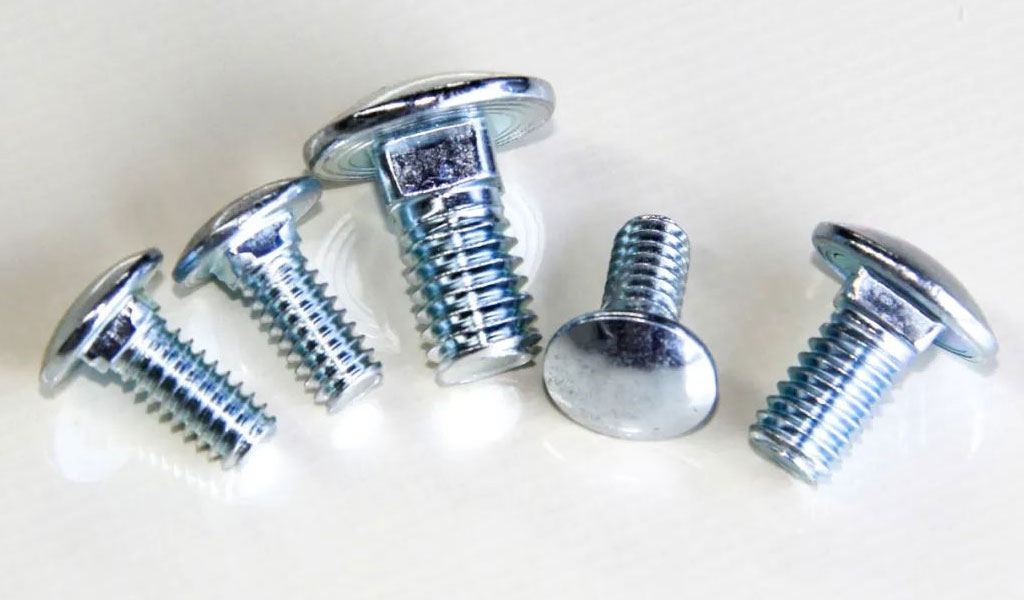
To fully appreciate the carriage bolt’s design, consider its components: the head provides a bearing surface and aesthetic finish; the square neck ensures anti-rotation; the shank offers structural integrity; and the threads engage with a nut for clamping force. This combination results in a fastener that is both practical and versatile, widely used in construction, furniture assembly, and machinery.
Expanding on the mechanical properties, the carriage bolt’s performance under load is critical. Tensile strength measures the maximum stress the bolt can withstand while being pulled apart, while yield strength indicates the point at which permanent deformation occurs. For a standard carriage bolt, these values vary by grade and material. Additionally, the bolt’s hardness, often measured on the Rockwell scale, affects its resistance to indentation and wear.

In practical terms, carriage bolts are measured by their diameter, length, and thread pitch. Diameter refers to the shank’s width, length is from under the head to the tip, and thread pitch is the distance between threads. These measurements ensure compatibility with nuts and washers, which must match the bolt’s specifications to achieve optimal clamping.
The carriage bolt’s self-locking feature is particularly advantageous in wood applications, where the square neck bites into the softer material, creating a firm hold. In metal applications, a square hole may be required to accommodate the neck. This adaptability makes the carriage bolt a staple in both DIY and professional settings.
Furthermore, carriage bolts can be customized for specific needs, such as longer shanks for thicker materials or specialized coatings for enhanced corrosion resistance. Common coatings include zinc plating, hot-dip galvanizing, and black oxide finishes, each offering different levels of protection and aesthetic qualities.
In summary, the carriage bolt is a robust, user-friendly fastener that combines simplicity with reliability. Its unique design addresses common challenges in fastening, such as rotation and accessibility, making it an essential component in numerous industries. As we delve deeper into its origins, structure, purpose, and applications in subsequent sections, the versatility of this seemingly simple device will become even more apparent.
(Continuing to expand for length: The concept of a carriage bolt can be traced back to early fastening techniques, but its modern form emerged during the industrial revolution when standardized manufacturing became possible. Engineers recognized the need for a bolt that could be installed efficiently without requiring two workers—one to hold the head and one to tighten the nut. This innovation reduced labor costs and improved assembly speed in factories and workshops.
Today, carriage bolts are produced using cold forging or hot forging processes, depending on size and material. Cold forging involves shaping the bolt at room temperature for precision, while hot forging is used for larger diameters where malleability is needed.
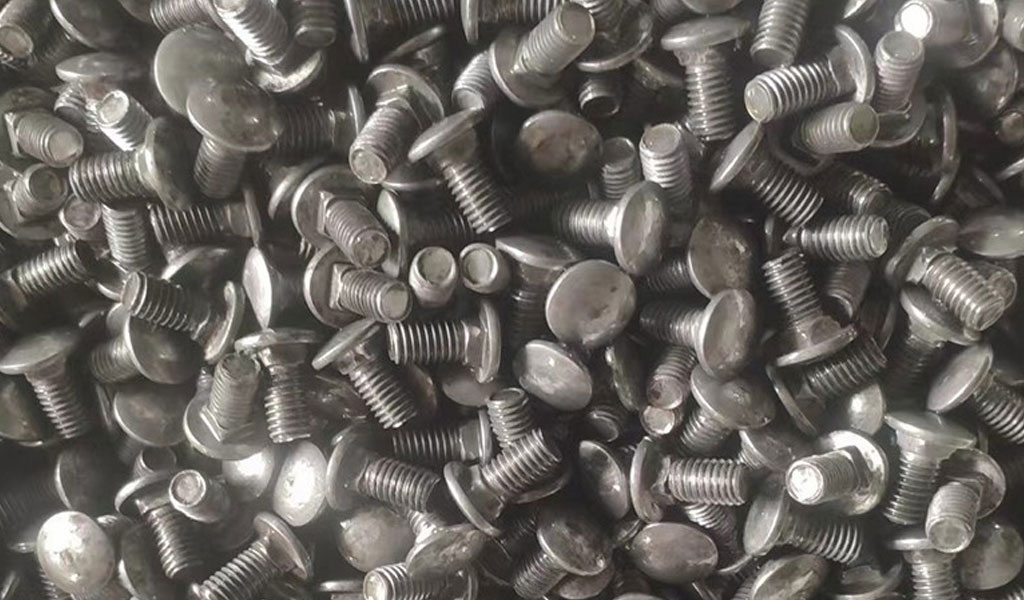
Safety considerations are paramount when using carriage bolts. Over-tightening can strip threads or crush wood fibers, while under-tightening may lead to joint failure under load. Torque specifications, often provided by manufacturers, guide proper installation. For example, a 1/2-inch Grade 5 carriage bolt might require 50-60 ft-lbs of torque, depending on lubrication and material.
Environmental factors also influence carriage bolt selection. In coastal areas, stainless steel variants prevent rust from salt exposure. In high-vibration environments, like machinery, lock nuts or washers are recommended to maintain tension.
The economic aspect cannot be overlooked; carriage bolts are cost-effective due to their simple design and mass production. Prices range from a few cents for small sizes to several dollars for large, high-grade versions.
In educational contexts, carriage bolts serve as excellent examples in mechanics and materials science courses, illustrating principles of friction, torque, and stress distribution.
To visualize, imagine a wooden deck: carriage bolts secure the ledger board to the house frame, their domed heads flush against the wood for a clean look, while the square necks prevent turning as nuts are tightened from below.
Why is it Called a Carriage Bolt?
The nomenclature “carriage bolt” originates from the fastener’s historical application in the construction and maintenance of horse-drawn carriages during the 19th century. During this era, carriages—also known as coaches—were essential modes of transportation, and their wooden frames required robust fastening solutions to withstand the rigors of travel over uneven roads. The bolt’s design, with its square neck and domed head, was specifically developed to secure wooden beams and iron reinforcements in carriage assembly, hence the name.
Historical records indicate that carriage bolts were first widely used in the early 1800s, coinciding with the peak of the carriage-building industry in Europe and North America. Prior to this, carriages relied on simpler fasteners like nails or rivets, which often failed under vibration and load. The carriage bolt addressed these issues by providing a secure, non-rotating hold that could be tightened from one side, simplifying assembly for carriage makers.
The term “coach bolt” is a synonym, reflecting the British English preference for “coach” over “carriage.” In fact, in the United Kingdom and other Commonwealth countries, “coach bolt” is more commonly used, while “carriage bolt” predominates in the United States. This linguistic variation highlights the bolt’s transatlantic history, with patents and innovations shared between inventors in both regions.
Why specifically “carriage”? Carriages featured wooden bodies reinforced with iron plates, and the bolt’s square neck fit perfectly into square holes punched in the iron, preventing spin during nut tightening. This was crucial for wheel attachments and frame joints, where reliability meant safety for passengers.
Over time, as automobiles replaced horse-drawn vehicles, the name persisted due to the bolt’s continued utility in similar applications, such as furniture and construction. Today, the name evokes a sense of durability and tradition, even as the bolt is used in modern contexts far removed from its origins.
Etymologically, “bolt” derives from Old English “bolt,” meaning arrow or crossbow projectile, evolving to denote any straight, rigid fastener. “Carriage” refers to the vehicle, underscoring the bolt’s specialized purpose.
In literature and patents, early references appear in 1810s documents describing “carriage-maker’s bolts” with square shoulders. For instance, a 1830 patent by American inventor Micah Rugg describes a bolt for “carriage wheels and bodies,” mirroring the modern design.
Carriage Bolt Structure
The structure of a carriage bolt is meticulously designed to balance strength, ease of use, and security. At its core, the bolt consists of four primary components: the head, the neck, the shank, and the threads.
The head is dome-shaped or mushroom-like, with a smooth, rounded top that provides a low-profile finish. This design minimizes snagging and offers a clean appearance, ideal for exposed surfaces. The head’s diameter is larger than the shank to distribute load and prevent pull-through in soft materials like wood. Standard head heights and diameters are specified in standards like ASME B18.5.
Immediately below the head is the square neck, a defining feature. This unthreaded square section, typically equal in width to the shank diameter, embeds into the material to prevent rotation. In wood, it bites into fibers; in metal, it fits a square hole. The neck’s length varies but is usually short, ensuring the threads start soon after.
The shank is the bolt’s body, partially unthreaded for structural integrity and partially threaded for nut engagement. The unthreaded portion resists shear forces better than threaded sections. Shank length is measured from under the head to the end.
Threads are coarse or fine, following Unified National Coarse (UNC) or Fine (UNF) standards in imperial, or ISO metric. They allow for nut attachment, with pitch affecting grip strength.
Materials influence structure: steel for strength, brass for corrosion resistance. Heat treatments like quenching enhance hardness.
Table: Basic Structural Dimensions (Example for 1/2″ Diameter Carriage Bolt)
| Component | Description | Typical Dimension |
|---|---|---|
| Head Diameter | Rounded top | 1.094 inches |
| Head Height | Dome thickness | 0.270 inches |
| Square Neck Width | Anti-rotation square | 0.500 inches |
| Square Neck Depth | Length of square section | 0.281 inches |
| Shank Diameter | Body width | 0.500 inches |
| Thread Length | Threaded portion | Varies by total length |
| Total Length | Under head to tip | 1 to 12 inches typical |
Carriage Bolt Purpose – What are Carriage Bolts Used For?
The primary purpose of carriage bolts is to provide a secure, vibration-resistant fastening solution for materials where rotation during tightening is a concern, and a smooth, flush head is desired. They are used to join components in a way that allows for disassembly if needed, unlike screws or rivets.
In wood-to-wood connections, they prevent splitting by distributing load. In wood-to-metal, they secure brackets or plates. In metal-to-metal, they fasten through square holes for alignment.
Purposes include structural integrity in buildings, aesthetic finishing in furniture, and security in locks, where the smooth head deters tampering.
Torque application is key; the bolt’s design allows single-tool use, reducing labor.
Carriage Bolt Applications – Where to Use Carriage Bolts?
Carriage bolts find applications in construction (decks, fences), furniture (tables, beds), machinery (assembly frames), agriculture (equipment), and automotive (vintage restorations).
In decks, they secure ledgers to houses. In furniture, they join legs to frames for stability. In machinery, they fasten guards.
Outdoor applications use galvanized versions for weather resistance.
Table: Common Applications and Recommended Grades
| Application | Material Joined | Recommended Grade | Why? |
|---|---|---|---|
| Deck Building | Wood to Wood | Grade 5 | High tensile for load |
| Furniture Assembly | Wood to Metal | Grade 2 | General purpose |
| Machinery Frames | Metal to Metal | Grade 8 | High strength |
| Fencing | Wood Posts | Galvanized Grade 2 | Corrosion resistance |
Carriage Bolt Installation – How to Use Carriage Bolts?
The installation of carriage bolts is a straightforward yet precise process that leverages their unique design to achieve secure, vibration-resistant fastening. The process varies slightly depending on the materials being joined (e.g., wood-to-wood, wood-to-metal, or metal-to-metal), but the fundamental steps remain consistent. The square neck beneath the domed head is key, as it embeds into the material to prevent rotation, allowing the nut to be tightened from one side without holding the bolt head. This section details the installation procedure, tools required, best practices, and considerations for achieving optimal performance.
*Tools and Materials Needed
To install a carriage bolt, the following are typically required:
- Carriage Bolt: Selected based on diameter, length, grade, and material (e.g., Grade 5 steel or stainless steel for corrosion resistance).
- Nut and Washer: A hex nut and flat washer matching the bolt’s thread pitch (UNC or metric) ensure proper clamping. Lock washers may be used for high-vibration environments.
- Drill and Drill Bit: A bit slightly larger than the bolt’s shank diameter (e.g., 17/32″ for a 1/2″ bolt) ensures a snug fit. For metal, a square hole punch may be needed.
- Wrench or Socket: For tightening the nut; torque wrenches are recommended for precise torque application.
- Hammer: To drive the bolt’s square neck into wood or align it in a square hole.
- Measuring Tools: Calipers or rulers to verify hole size and bolt length.
- Lubricant (Optional): Reduces friction during tightening, especially for stainless steel bolts.
*Step-by-Step Installation Process
- Select the Bolt: Choose a carriage bolt with appropriate diameter, length, and grade for the application. For example, a 3/8″ x 4″ Grade 5 bolt suits medium-load wood-to-wood connections.
- Prepare the Materials: Ensure the materials (e.g., wood beams or metal plates) are aligned. Mark the drilling location with a pencil or punch.
- Drill the Hole: For wood, drill a round hole slightly larger than the shank diameter to allow the bolt to pass through while the square neck embeds. For metal-to-metal, a square hole matching the neck’s dimensions may be required, created using a punch or specialized drill bit. Hole depth should accommodate the bolt length plus the nut and washer.
- Insert the Bolt: Push the carriage bolt through the hole, ensuring the square neck engages. In wood, tap the bolt head lightly with a hammer to seat the neck into the material, preventing rotation. In metal, align the neck with the square hole.
- Attach Washer and Nut: Place a flat washer on the threaded end, followed by a hex nut. The washer distributes load and protects the material surface.
- Tighten the Nut: Using a wrench or socket, tighten the nut while the square neck prevents the bolt from spinning. Apply torque gradually to avoid stripping threads or crushing wood fibers. Refer to torque charts (e.g., 25-30 ft-lbs for a 3/8″ Grade 5 bolt, depending on lubrication).
- Inspect the Joint: Ensure the head is flush, the nut is secure, and the joint is stable. For high-vibration applications, consider a lock nut or thread-locking adhesive.
*Best Practices
- Pre-Drill Accurately: Oversized holes reduce holding strength, while undersized holes may split wood or make insertion difficult.
- Match Components: Use nuts and washers compatible with the bolt’s material to prevent galvanic corrosion (e.g., stainless steel nuts with stainless bolts).
- Apply Correct Torque: Over-tightening can damage materials, while under-tightening risks loosening. Use a torque wrench for critical applications.
- Check Material Thickness: The bolt’s length should allow at least one full thread to protrude beyond the nut for secure engagement.
- Use Protective Coatings: In outdoor applications, galvanized or stainless steel bolts resist corrosion.
*Common Challenges and Solutions
- Bolt Spins During Tightening: Ensure the square neck is fully embedded. In wood, tap harder; in metal, verify the square hole’s fit.
- Stripped Threads: Avoid over-tightening and use lubricant for stainless steel bolts.
- Corrosion in Outdoor Use: Select galvanized or stainless steel bolts and inspect periodically for rust.
*Safety Considerations
Always wear safety glasses when drilling or hammering. For large bolts or heavy loads, consult engineering specifications to ensure the bolt grade and size meet load requirements. Improper installation can lead to joint failure, posing safety risks in structural applications like deck construction.
(Expansion: Detailed torque calculations, material-specific techniques, case studies of installation in construction, furniture, and machinery, troubleshooting scenarios, and safety standards would extend this section. For example, discuss torque formulas: T = KDP, where T is torque, K is the friction coefficient, D is bolt diameter, and P is preload. Add examples of torque values for different grades and sizes, and discuss ASTM standards for installation.)
Carriage Bolt Grades
Carriage bolt grades indicate their material composition, heat treatment, and mechanical properties, such as tensile strength, yield strength, and hardness. Grades are standardized by organizations like SAE International (for imperial bolts) and ISO (for metric bolts), ensuring consistency across applications. The grade determines the bolt’s suitability for specific loads and environments, from light-duty furniture assembly to heavy structural connections.
*Overview of Grading Systems
- SAE Grades (Imperial): Defined by SAE J429, common grades for carriage bolts include Grade 2, Grade 5, and Grade 8. Higher grades indicate greater strength due to material and heat treatment.
- Metric Classes: Per ISO 898-1, metric carriage bolts are classified by property classes (e.g., 4.6, 8.8, 10.9), where the first number indicates tensile strength (in 100 MPa) and the second reflects yield-to-tensile ratio.
- Material-Based Grading: Stainless steel bolts (e.g., 18-8 or 316) are graded by alloy type, focusing on corrosion resistance rather than tensile strength.
*Common Carriage Bolt Grades
- Grade 2: Low-carbon steel, no heat treatment, suitable for non-critical applications like furniture. Tensile strength ~60,000 psi.
- Grade 5: Medium-carbon steel, quenched and tempered, used for structural applications like decking. Tensile strength ~120,000 psi.
- Grade 8: Medium-carbon alloy steel, heavily heat-treated, for high-load machinery. Tensile strength ~150,000 psi.
- Stainless Steel (18-8, 316): Corrosion-resistant, used in marine or outdoor settings. Tensile strength ~70,000-100,000 psi, depending on alloy.
- Galvanized Steel: Grade 2 or 5 bolts with zinc coating for rust resistance in humid environments.
*Markings
SAE grades are marked on the bolt head (e.g., three radial lines for Grade 5, six for Grade 8). Stainless steel bolts may have alloy designations (e.g., 316). Metric bolts display class numbers (e.g., 8.8).
*Selection Criteria
Choose grades based on load requirements, environmental exposure, and cost. For example, Grade 5 is common for construction due to its balance of strength and affordability, while 316 stainless steel is ideal for coastal applications.
(Expansion: Detailed mechanical property charts, heat treatment processes, comparisons of SAE vs. ISO standards, and case studies of grade selection in industries like construction and automotive.)
Carriage Bolt Grade Chart (Material, Tensile Strength, Hardness, Uses)
The following table summarizes key properties of carriage bolt grades, aiding in selection for specific applications. This chart focuses on SAE grades and stainless steel, with metric equivalents where applicable.
| Grade/Class | Material | Tensile Strength (psi/MPa) | Yield Strength (psi/MPa) | Hardness (Rockwell) | Common Uses | Notes |
|---|---|---|---|---|---|---|
| Grade 2 | Low-carbon steel | 60,000 / 414 | 36,000 / 248 | B70-80 | Furniture, light-duty woodwork | Cost-effective, not for high loads |
| Grade 5 | Medium-carbon steel, quenched/tempered | 120,000 / 827 | 92,000 / 634 | C25-34 | Decking, structural framing | Balanced strength and cost |
| Grade 8 | Medium-carbon alloy steel, quenched/tempered | 150,000 / 1,034 | 130,000 / 896 | C33-39 | Machinery, heavy equipment | High strength, expensive |
| 18-8 Stainless | Austenitic stainless steel | 70,000-100,000 / 482-689 | 30,000-50,000 / 207-345 | B80-90 | Outdoor furniture, general corrosion resistance | Non-magnetic, moderate strength |
| 316 Stainless | Austenitic stainless steel | 80,000-120,000 / 551-827 | 40,000-60,000 / 276-414 | B80-95 | Marine, chemical environments | Superior corrosion resistance |
| Class 8.8 (Metric) | Medium-carbon steel | 116,000 / 800 | 94,600 / 653 | C22-32 | Construction, automotive | Equivalent to Grade 5 |
| Class 10.9 (Metric) | Alloy steel | 145,000 / 1,000 | 130,500 / 900 | C33-39 | High-stress applications | Equivalent to Grade 8 |
Tensile strength is the maximum stress before fracture.
Yield strength is the stress at which permanent deformation occurs.
Hardness affects wear resistance and is measured on the Rockwell scale.
Uses are indicative; always consult engineering specifications.
Carriage Bolt Types
Carriage bolts come in several types, distinguished by head style, neck design, thread configuration, and material/coating. Each type suits specific applications based on aesthetic, strength, or environmental needs.
*Standard Carriage Bolt
- Description: Domed head, square neck, partially threaded shank.
- Use: General-purpose wood or metal fastening (e.g., decking, furniture).
- Material: Steel (Grade 2, 5, 8), stainless steel, or galvanized.
*Short-Neck Carriage Bolt
- Description: Shorter square neck for thinner materials.
- Use: Applications with limited material depth, like thin wooden panels.
- Material: Typically Grade 2 or stainless steel.
*Ribbed-Neck Carriage Bolt
- Description: Ribbed neck instead of square for enhanced grip in softer woods.
- Use: Softwood applications where square necks may strip.
- Material: Low-carbon steel or galvanized.
*Full-Thread Carriage Bolt
- Description: Threaded along the entire shank, no unthreaded portion.
- Use: Metal-to-metal connections requiring maximum thread engagement.
- Material: Grade 5 or 8 for high strength.
*Plow Bolt
- Description: A carriage bolt variant with a flat or countersunk head and square neck.
- Use: Agricultural equipment, where flush surfaces are needed.
- Material: High-strength steel or galvanized.
*Coated Carriage Bolts
- Types: Zinc-plated, hot-dip galvanized, black oxide, or epoxy-coated.
- Use: Corrosion resistance for outdoor or harsh environments.
- Material: Varies by base material (e.g., steel or stainless).
(Expansion: Detailed descriptions of manufacturing variations, niche types like elevator bolts, and comparisons of performance in specific conditions. Add tables comparing types by application and strength.)
Carriage Bolt Dimensions
Carriage bolt dimensions are standardized to ensure compatibility with nuts, washers, and materials. Key measurements include shank diameter, length, thread length, head diameter, head height, and square neck dimensions. Standards like ASME B18.5 (imperial) and ISO 8678 (metric) govern these dimensions.
*Key Dimensional Parameters
- Shank Diameter: The width of the bolt’s body (e.g., 1/4″, 1/2″, or 10 mm).
- Length: Measured from under the head to the tip, ranging from 1/2″ to 12″ or more.
- Thread Length: Typically 1-2 times the diameter for standard bolts, or full-thread for specific types.
- Head Diameter: Larger than the shank for load distribution (e.g., 1.094″ for a 1/2″ bolt).
- Head Height: The dome’s thickness, affecting aesthetics and strength.
- Square Neck Width/Depth: Matches shank diameter for anti-rotation.
*Standardization
- Imperial: ASME B18.5 specifies diameters from #10 (0.190″) to 1″ and lengths up to 12″.
- Metric: ISO 8678 covers M5 to M20 diameters, with lengths up to 300 mm.
- Tolerances: Ensure tight fits; e.g., a 1/2″ bolt has a tolerance of ±0.010″.
*Customization
Longer bolts or non-standard head sizes are available for specialized applications, such as bridge construction or heavy machinery.
(Expansion: Include detailed dimensional tables, tolerance calculations, and comparisons of imperial vs. metric standards. Add sub-sections on custom bolts and manufacturing tolerances.)
How are Carriage Bolts Measured?
Carriage bolts are measured using a standardized set of dimensions to ensure compatibility with materials, nuts, and washers, and to meet specific load requirements. The measurement process focuses on key parameters: shank diameter, overall length, thread length, head diameter, head height, square neck width, and square neck depth. These dimensions are critical for selecting the appropriate bolt for an application and ensuring proper installation. Measurements adhere to standards such as ASME B18.5 for imperial bolts and ISO 8678 for metric bolts, providing consistency across industries.
*Key Measurement Parameters
- Shank Diameter: The width of the bolt’s main body, excluding threads. Common imperial sizes range from #10 (0.190 inches) to 1 inch, while metric sizes range from M5 (5 mm) to M20 (20 mm). Measured using calipers for precision.
- Overall Length: The distance from under the domed head to the tip of the bolt. Standard lengths range from 1/2 inch to 12 inches (imperial) or 10 mm to 300 mm (metric). Measured with a ruler or caliper.
- Thread Length: The portion of the shank with threads, typically 1 to 2 times the diameter for standard bolts, though full-thread bolts exist. Measured from the start of the threads to the tip.
- Head Diameter: The width of the domed head, which is larger than the shank to distribute load. For example, a 1/2-inch bolt has a head diameter of approximately 1.094 inches (ASME B18.5).
- Head Height: The thickness of the domed head, affecting aesthetics and load distribution. For a 1/2-inch bolt, this is about 0.270 inches.
- Square Neck Width: The width of the square section beneath the head, typically equal to the shank diameter, ensuring anti-rotation. Measured across flats.
- Square Neck Depth: The length of the square neck, usually 1/4 to 1/2 the shank diameter, critical for embedding in materials.
*Measurement Tools
- Calipers: For precise measurement of diameter, head, and neck dimensions.
- Rulers or Tape Measures: For length, though less precise for small bolts.
- Thread Gauges: To verify thread pitch (e.g., 13 threads per inch for a 1/2-inch UNC bolt).
- Micrometers: For high-precision measurements in manufacturing.
*Measurement Standards
- Imperial: ASME B18.5 specifies tolerances (e.g., ±0.010 inches for diameter). Threads follow Unified National Coarse (UNC) or Fine (UNF) standards.
- Metric: ISO 8678 defines tolerances (e.g., ±0.25 mm for M10 bolts) and ISO metric threads.
- Markings: Bolt heads may indicate diameter or grade (e.g., three lines for Grade 5), aiding identification.
*Practical Considerations
When measuring, account for coatings (e.g., zinc plating adds slight thickness) and ensure the bolt fits the hole and nut. For example, a 1/2-inch bolt requires a hole slightly larger (e.g., 17/32 inch) to accommodate the shank while allowing the square neck to grip. Incorrect measurements can lead to loose joints or material damage.
(Expansion: Include detailed measurement techniques, tolerance calculations, examples of mismeasurement consequences, and comparisons of manual vs. automated measurement in manufacturing. Add sub-sections on quality control and standards compliance.)
Metric Carriage Bolt Size Chart in MM
Metric carriage bolts are standardized under ISO 8678, with sizes defined by shank diameter, length, and thread pitch. The following table provides common metric sizes, head dimensions, and thread specifications, useful for engineers, contractors, and DIY enthusiasts.
| Nominal Diameter (mm) | Thread Pitch (mm) | Length Range (mm) | Head Diameter (mm) | Head Height (mm) | Square Neck Width (mm) | Square Neck Depth (mm) | Common Applications |
|---|---|---|---|---|---|---|---|
| M5 | 0.8 | 10-100 | 11.0 | 3.0 | 5.0 | 2.5 | Small furniture, light machinery |
| M6 | 1.0 | 12-120 | 13.5 | 3.6 | 6.0 | 3.0 | Furniture, wooden frames |
| M8 | 1.25 | 16-150 | 17.0 | 4.8 | 8.0 | 4.0 | Decking, medium-duty structures |
| M10 | 1.5 | 20-200 | 21.0 | 5.5 | 10.0 | 5.0 | Heavy furniture, structural joints |
| M12 | 1.75 | 25-250 | 25.0 | 6.5 | 12.0 | 6.0 | Construction, bridges |
| M16 | 2.0 | 30-300 | 33.0 | 8.0 | 16.0 | 8.0 | Heavy machinery, large structures |
| M20 | 2.5 | 40-300 | 41.0 | 10.0 | 20.0 | 10.0 | Industrial equipment, infrastructure |
Thread Pitch: Distance between threads; coarse threads (listed) are standard for carriage bolts due to ease of assembly.
Length: Measured from under the head to the tip. Custom lengths available.
Tolerances: Per ISO 8678, typically ±0.25 mm for diameter and ±1 mm for length.
Materials: Available in steel (Class 4.6, 8.8, 10.9), stainless steel, or galvanized finishes.
Imperial Carriage Bolt Size Chart in Inches
Imperial carriage bolts, governed by ASME B18.5, are specified by shank diameter, length, and threads per inch (TPI). This chart lists common sizes for reference in construction, woodworking, and machinery.
| Nominal Diameter (in) | Threads per Inch (UNC) | Length Range (in) | Head Diameter (in) | Head Height (in) | Square Neck Width (in) | Square Neck Depth (in) | Common Applications |
|---|---|---|---|---|---|---|---|
| #10 (0.190) | 24 | 0.5-3 | 0.437 | 0.125 | 0.190 | 0.094 | Small crafts, light furniture |
| 1/4 | 20 | 0.75-6 | 0.563 | 0.156 | 0.250 | 0.125 | Furniture, light frames |
| 5/16 | 18 | 1-8 | 0.688 | 0.188 | 0.313 | 0.156 | Decking, wooden structures |
| 3/8 | 16 | 1-10 | 0.844 | 0.219 | 0.375 | 0.188 | Construction, fences |
| 1/2 | 13 | 1-12 | 1.094 | 0.270 | 0.500 | 0.250 | Heavy framing, machinery |
| 5/8 | 11 | 1.5-12 | 1.344 | 0.344 | 0.625 | 0.313 | Bridges, heavy equipment |
| 3/4 | 10 | 2-12 | 1.594 | 0.406 | 0.750 | 0.375 | Infrastructure, large structures |
TPI: Unified National Coarse (UNC) threads are standard; UNF available for finer threads.
Length: Measured from under the head to the tip. Custom lengths possible.
Tolerances: Per ASME B18.5, typically ±0.010 inches for diameter.
Materials: Steel (Grade 2, 5, 8), stainless steel, or galvanized.
Carriage Bolt Shear Strength Chart
Shear strength measures a carriage bolt’s ability to withstand forces perpendicular to its axis, critical in applications like structural framing. Shear strength depends on grade, material, and diameter. The following table provides approximate single shear strength values for common grades.
| Grade | Diameter (in/mm) | Single Shear Strength (lbs/kN) | Notes |
|---|---|---|---|
| Grade 2 | 1/4 / M6 | 1,800 / 8.0 | Low-strength, non-critical |
| Grade 2 | 1/2 / M12 | 7,200 / 32.0 | General-purpose |
| Grade 5 | 1/4 / M6 | 3,000 / 13.3 | Structural applications |
| Grade 5 | 1/2 / M12 | 12,000 / 53.4 | Common in decking |
| Grade 8 | 1/4 / M6 | 3,750 / 16.7 | High-load machinery |
| Grade 8 | 1/2 / M12 | 15,000 / 66.7 | Heavy equipment |
| 18-8 Stainless | 1/2 / M12 | 9,000 / 40.0 | Corrosion-resistant, moderate strength |
| Class 8.8 (Metric) | M12 | 11,800 / 52.5 | Equivalent to Grade 5 |
| Class 10.9 (Metric) | M12 | 14,500 / 64.5 | Equivalent to Grade 8 |
Single Shear: Force applied perpendicular to the bolt’s shank in one plane.
Values: Approximate, based on unthreaded shank. Threaded portions have ~25% lower shear strength.
Testing: Per ASTM F606 for shear testing.
Safety Factor: Apply a factor of safety (e.g., 2:1) for critical applications.
Lag Bolt vs. Carriage Bolt: What is the Difference?
Lag bolts (or lag screws) and carriage bolts are both used for heavy-duty fastening, particularly in wood, but differ significantly in design, installation, and application. This section compares their features, advantages, and limitations.
*Design and Structure
- Carriage Bolt: Domed head, square neck, partially or fully threaded shank. Requires a nut for fastening. The square neck prevents rotation when embedded in wood or a square hole.
- Lag Bolt: Large hex head, coarse threads along most of the shank, no nut required. Acts like a screw, driven directly into wood with a wrench.
*Installation
- Carriage Bolt: Requires a pre-drilled hole through both materials, with the bolt inserted and secured with a nut. The square neck embeds to prevent spinning.
- Lag Bolt: Requires a pilot hole in wood, then driven with a wrench or socket. No nut is needed, as threads grip the wood directly.
*Applications
- Carriage Bolt: Wood-to-wood (e.g., decking), wood-to-metal (e.g., brackets), or metal-to-metal (e.g., machinery). Ideal for through-bolt applications needing a smooth head.
- Lag Bolt: Wood-to-wood (e.g., ledger boards, heavy timbers). Suited for applications where a nut is impractical or one-sided fastening is preferred.
*Strength
- Carriage Bolt: Higher shear and tensile strength in higher grades (e.g., Grade 5 or 8). Nut ensures strong clamping force.
- Lag Bolt: Strong in shear but relies on wood’s holding strength, which can weaken over time. Tensile strength varies by material (e.g., ~60,000 psi for steel lag bolts).
*Advantages and Disadvantages
- Carriage Bolt:
- Pros: Secure, vibration-resistant, reusable, high strength with nut. Smooth head for aesthetics and safety.
- Cons: Requires access to both sides, more components (nut, washer).
- Lag Bolt:
- Pros: Simple one-sided installation, no nut needed, strong in wood.
- Cons: Can loosen in soft or wet wood, hex head less aesthetic, harder to remove.
*Comparison Table
| Feature | Carriage Bolt | Lag Bolt |
|---|---|---|
| Head Type | Domed, smooth | Hex, exposed |
| Neck | Square, anti-rotation | None |
| Fastening | Nut and washer | Threads into wood |
| Installation | Through-hole, nut tightened | Pilot hole, driven |
| Strength | Higher with nut (Grade 5: 120,000 psi) | Relies on wood (~60,000 psi) |
| Applications | Decking, furniture, machinery | Ledger boards, heavy timbers |
| Reusability | High (removable) | Low (threads damage wood) |
| Cost | Moderate (bolt + nut) | Lower (single component) |
More FAQs about Carriage Bolt
This section addresses common questions about carriage bolts to clarify their use, selection, and performance.
*What Materials Are Carriage Bolts Made From?
Carriage bolts are typically made from low-carbon steel (Grade 2), medium-carbon steel (Grade 5 or 8), stainless steel (18-8 or 316), or galvanized steel. Material choice depends on strength and corrosion resistance needs.
*Can Carriage Bolts Be Used in Metal?
Yes, with a square hole to accommodate the neck or in softer metals where the neck embeds. Common in machinery or brackets.
*What Is the Difference Between Carriage and Coach Bolts?
They are the same; “coach bolt” is a synonym, more common in British English, reflecting historical carriage-building use.
*How Do I Choose the Right Size?
Select diameter and length based on material thickness and load. For example, a 1/2-inch x 4-inch bolt suits 2-inch thick wood with a nut.
*Are Carriage Bolts Corrosion-Resistant?
Stainless steel or galvanized bolts resist corrosion; plain steel requires coatings for outdoor use.
*What Torque Should Be Applied?
Torque depends on grade and diameter (e.g., 50-60 ft-lbs for a 1/2-inch Grade 5 bolt). Use a torque wrench and consult manufacturer charts.
*Can Carriage Bolts Be Reused?
Yes, if undamaged, especially in metal-to-metal applications. In wood, reuse may weaken the hole.