
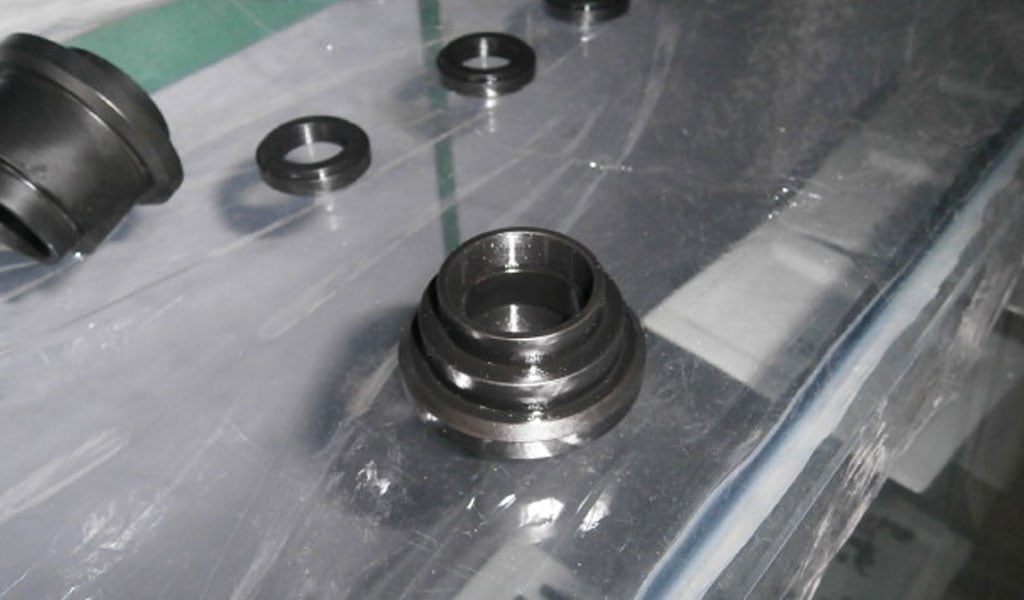
Carburizing, nitriding, and carbonitriding are thermochemical surface-hardening processes widely employed in materials engineering to enhance the mechanical properties of metallic components, particularly those made from steel.
These processes introduce carbon, nitrogen, or a combination of both into the surface layer of a material, thereby improving its hardness, wear resistance, and fatigue strength.
While they share the common goal of surface modification, their methodologies, applications, and outcomes differ significantly.
This article provides an in-depth exploration of carburizing, nitriding, and carbonitriding, elucidating their differences, advantages, disadvantages, and suitability for various engineering applications. Through a detailed scientific analysis, including comparative tables, this discussion aims to clarify which process might be considered “better” depending on specific use cases.
Carburizing: Principles and Mechanisms
Carburizing is a heat treatment process that involves the diffusion of carbon into the surface of a low-carbon steel or alloy steel at elevated temperatures, typically ranging from 850°C to 950°C (1562°F to 1742°F). The primary objective is to increase the carbon content in the outer layer of the material, creating a hard, wear-resistant case while retaining a tough, ductile core. This dual-structure characteristic makes carburized components ideal for applications requiring resistance to surface wear and the ability to withstand mechanical stresses.
The process begins with heating the steel in a carbon-rich environment, which can be achieved through various methods: gas carburizing, liquid carburizing (using cyanide salts), solid carburizing (pack carburizing with charcoal or other carbon sources), and vacuum carburizing. Gas carburizing, the most common industrial method, utilizes a furnace atmosphere containing carbon monoxide (CO) and methane (CH₄). At high temperatures, carbon atoms dissociate from these gases and diffuse into the steel’s surface. The depth of the carbon-rich layer, known as the case depth, typically ranges from 0.1 mm to 3 mm (0.004 in to 0.118 in), depending on the duration of exposure, temperature, and the steel’s composition.
After carburizing, the component is quenched—rapidly cooled in oil, water, or air—to transform the carbon-enriched surface layer into martensite, a hard, brittle phase of steel. This quenching step is critical, as it locks in the hardness achieved through carbon diffusion. A subsequent tempering process may be applied to reduce brittleness and relieve internal stresses, adjusting the balance between hardness and toughness.
Carburizing is particularly effective for low-carbon steels (e.g., AISI 1018, 1020) with carbon contents below 0.25%. These steels lack sufficient carbon to harden significantly on their own through heat treatment alone, making carburizing an essential step for applications such as gears, camshafts, and bearings. The resulting case hardness typically ranges from 58 to 63 HRC (Rockwell C scale), while the core remains softer, around 20–40 HRC, providing ductility and toughness.
The advantages of carburizing include its ability to produce deep case depths, its applicability to complex geometries, and its cost-effectiveness for large-scale production. However, it has drawbacks, such as the potential for distortion due to high processing temperatures and quenching, as well as the need for precise atmosphere control to avoid decarburization or uneven carbon distribution.
Nitriding: Principles and Mechanisms
Nitriding differs fundamentally from carburizing in that it introduces nitrogen, rather than carbon, into the steel surface. This process occurs at lower temperatures, typically between 500°C and 580°C (932°F to 1076°F), and does not require quenching, which distinguishes it from carburizing. Nitriding enhances surface hardness and wear resistance by forming hard nitride compounds with alloying elements such as chromium, molybdenum, aluminum, and vanadium present in the steel.
There are three primary nitriding methods: gas nitriding, plasma nitriding (ion nitriding), and salt bath nitriding. Gas nitriding, the most widely used, involves exposing the steel to an ammonia (NH₃) atmosphere. At the process temperature, ammonia dissociates into nitrogen and hydrogen, and the atomic nitrogen diffuses into the steel surface. Plasma nitriding, a more modern technique, uses a glow discharge in a nitrogen-rich gas to ionize nitrogen atoms, which then penetrate the surface. Salt bath nitriding employs molten cyanide salts to supply nitrogen, though its use has declined due to environmental and safety concerns.
Nitriding is typically applied to alloy steels (e.g., AISI 4140, 4340) or tool steels containing nitride-forming elements. The process forms a compound layer (often called the white layer) composed of iron nitrides (e.g., Fe₂₋₃N, Fe₄N) and a deeper diffusion zone where nitrogen integrates into the steel’s lattice. The compound layer is extremely hard, often exceeding 1000 HV (Vickers hardness), while the diffusion zone provides a gradual transition to the softer core, enhancing fatigue resistance.
Case depths in nitriding are generally shallower than in carburizing, ranging from 0.1 mm to 0.7 mm (0.004 in to 0.028 in), but the hardness achieved is higher, often 65–70 HRC. Because nitriding occurs below the steel’s transformation temperature (austenite formation range), it minimizes distortion and eliminates the need for post-process quenching, making it suitable for precision components like crankshafts, dies, and injection molds.
The benefits of nitriding include exceptional surface hardness, improved corrosion resistance (especially in stainless steels), and dimensional stability. However, it is slower and more expensive than carburizing, and its effectiveness depends heavily on the steel’s alloying elements, limiting its applicability to specific grades.
Carbonitriding: Principles and Mechanisms
Carbonitriding is a hybrid process that combines elements of carburizing and nitriding by introducing both carbon and nitrogen into the steel surface. It is typically performed at temperatures between 800°C and 880°C (1472°F to 1616°F)—lower than carburizing but higher than nitriding—in an atmosphere containing carbon monoxide, methane, and ammonia. Like carburizing, carbonitriding requires quenching to achieve full hardness, but the addition of nitrogen enhances the hardenability and wear resistance of the case.
The process is similar to gas carburizing, with the key difference being the ammonia addition, which supplies nitrogen. Carbon and nitrogen atoms diffuse simultaneously into the steel, forming a case that contains both martensite (from carbon) and nitride compounds (from nitrogen). The case depth typically ranges from 0.05 mm to 0.75 mm (0.002 in to 0.030 in), shallower than carburizing but comparable to nitriding in some applications. Surface hardness after quenching and tempering usually falls between 55 and 62 HRC.
Carbonitriding is most effective for low-carbon steels or medium-carbon steels (e.g., AISI 1018, 1045) and is widely used for small, intricate parts like screws, bolts, and light-duty gears. The nitrogen improves the steel’s response to quenching, allowing thinner cases to achieve high hardness, and enhances wear resistance beyond what carburizing alone can provide.
Advantages of carbonitriding include its versatility, relatively low cost, and ability to treat a wide range of steel grades. However, it shares carburizing’s disadvantage of potential distortion due to high temperatures and quenching, and its shallower case depths limit its use in heavy-duty applications.
Comparative Analysis: Differences in Process and Outcome
The differences between carburizing, nitriding, and carbonitriding stem from their process conditions, chemical mechanisms, and resulting material properties. Carburizing relies solely on carbon diffusion at high temperatures, requiring quenching to harden the case, and produces the deepest case depths. Nitriding uses nitrogen diffusion at lower temperatures, avoids quenching, and achieves the highest surface hardness with minimal distortion. Carbonitriding bridges the two by incorporating both carbon and nitrogen, offering a balance of hardness and case depth but requiring quenching like carburizing.
Temperature is a critical distinguishing factor. Carburizing’s high-temperature range (850–950°C) promotes rapid carbon diffusion but risks altering the steel’s microstructure and causing distortion. Nitriding’s lower range (500–580°C) preserves dimensional accuracy but slows diffusion, necessitating longer processing times. Carbonitriding’s intermediate range (800–880°C) provides a compromise, though it still demands careful control to manage distortion.
The chemical composition of the treated steel also influences the choice of process. Carburizing is ideal for low-carbon steels, where additional carbon is needed for hardening. Nitriding requires alloy steels with nitride-forming elements to maximize hardness. Carbonitriding, while versatile, performs best with low- to medium-carbon steels that benefit from enhanced hardenability.
Case depth and hardness profiles further differentiate the processes. Carburizing achieves deep cases (up to 3 mm) suitable for heavy loads, while nitriding and carbonitriding produce shallower cases (up to 0.7 mm) optimized for wear resistance. Nitriding’s compound layer offers unmatched hardness, whereas carburizing and carbonitriding rely on martensitic transformation for their hardness, tempered by subsequent heat treatments.
Applications and Industry Use
Carburizing is a staple in automotive and aerospace industries for components like gears, shafts, and bearings, where deep case depths and core toughness are paramount. Its ability to handle high-contact stresses and fatigue makes it indispensable for heavy machinery. Nitriding excels in precision engineering, such as tooling (dies, molds) and aerospace parts (crankshafts, turbine blades), where distortion must be minimized, and surface hardness is critical. Carbonitriding finds its niche in smaller, lighter components—fasteners, pins, and light-duty gears—where cost and moderate performance suffice.
Carburizing’s strengths lie in its deep case penetration and adaptability to complex shapes, but it is prone to distortion and requires careful atmosphere control. Nitriding offers superior hardness and dimensional stability, yet its higher cost and material specificity limit its use. Carbonitriding provides a cost-effective middle ground with good wear resistance, though its shallower cases and distortion risk restrict its scope.
Determining the “best” process depends on the application’s requirements. For heavy-duty components needing deep hardening and toughness, carburizing is superior. For precision parts requiring maximum hardness and minimal distortion, nitriding is the preferred choice. Carbonitriding suits cost-sensitive, moderate-duty applications where a balance of properties is acceptable. Factors such as material type, cost, production volume, and performance demands ultimately guide the decision.
Detailed Comparison Tables
Below are comprehensive tables comparing carburizing, nitriding, and carbonitriding across key parameters.
Table 1: Process Parameters
| Parameter | Carburizing | Nitriding | Carbonitriding |
|---|---|---|---|
| Temperature (°C) | 850–950 | 500–580 | 800–880 |
| Atmosphere | CO, CH₄ (e.g., endothermic gas) | NH₃ (ammonia) | CO, CH₄, NH₃ |
| Processing Time (h) | 2–20 | 10–100 | 1–10 |
| Quenching Required | Yes (oil, water, or air) | No | Yes (oil or water) |
| Case Depth (mm) | 0.1–3.0 | 0.1–0.7 | 0.05–0.75 |
Table 2: Material Suitability
| Material Type | Carburizing | Nitriding | Carbonitriding |
|---|---|---|---|
| Low-Carbon Steel | Excellent (e.g., AISI 1018) | Poor (lacks alloying elements) | Good (e.g., AISI 1018) |
| Alloy Steel | Good (e.g., AISI 8620) | Excellent (e.g., AISI 4140) | Good (e.g., AISI 1045) |
| Tool Steel | Poor | Excellent (e.g., H13) | Poor |
| Stainless Steel | Poor | Good (e.g., 304 with prep) | Poor |
Table 3: Mechanical Properties
| Property | Carburizing | Nitriding | Carbonitriding |
|---|---|---|---|
| Surface Hardness (HRC) | 58–63 | 65–70 | 55–62 |
| Core Hardness (HRC) | 20–40 | 30–50 (depends on base) | 20–40 |
| Wear Resistance | High | Very High | High |
| Fatigue Strength | High | Very High | Moderate |
| Distortion Risk | High | Low | Moderate |
Scientific Insights and Future Directions
From a metallurgical perspective, carburizing leverages the austenite-to-martensite transformation, a well-understood phenomenon governed by carbon solubility and cooling rates. Nitriding’s reliance on nitride precipitation reflects advances in alloy design, where elements like aluminum amplify hardness through compound formation. Carbonitriding’s dual-diffusion mechanism highlights the synergy between carbon and nitrogen, though its shallower cases suggest room for optimization.
Ongoing research explores hybrid processes, such as nitrocarburizing (a variant of carbonitriding with lower nitrogen content), and advanced plasma techniques to enhance diffusion rates and uniformity. Environmental considerations also drive innovation, with vacuum carburizing and plasma nitriding reducing the reliance on hazardous gases like ammonia or cyanide.
Carburizing, nitriding, and carbonitriding each offer unique benefits tailored to specific engineering needs. Carburizing excels in deep-case applications, nitriding in precision and hardness, and carbonitriding in versatility and cost. No single process is universally “better”; rather, the optimal choice hinges on material, geometry, performance criteria, and economic factors. Through careful selection and process control, engineers can harness these techniques to meet the demands of modern manufacturing.