
Reaction Injection Molding (RIM) is a sophisticated manufacturing process used to produce high-quality, complex plastic parts, primarily through the use of thermosetting polymers. Unlike traditional injection molding, which typically employs thermoplastic materials, RIM involves the mixing of two or more liquid components that undergo a chemical reaction within a mold to form a solid, durable polymer. This process is particularly valued in industries such as automotive, aerospace, medical, and consumer goods for its ability to create lightweight, strong, and intricately designed components with excellent surface finishes and structural integrity. Since its development in the 1960s, RIM has evolved into a versatile technology, with variants like Reinforced Reaction Injection Molding (RRIM) and Structural Reaction Injection Molding (SRIM) expanding its applications. This article provides an in-depth exploration of the RIM process, its materials, equipment, applications, advantages, disadvantages, and recent advancements, supported by detailed scientific comparisons and data.

What Is Reaction Injection Molding
The origins of Reaction Injection Molding can be traced back to the early 1960s, when the need for lightweight, durable materials in the automotive industry spurred innovation in polymer processing. The process was first showcased publicly at the 1967 International Plastic Fair in Düsseldorf, West Germany, where an all-plastic car demonstrated the potential of RIM to produce large, complex parts. By 1969, RIM was introduced in the United States to meet new automotive impact requirements mandated by Congress, particularly for components like bumpers and fenders.
The development of polyurethane-based RIM systems, pioneered by companies like Covestro (formerly Bayer), marked a significant milestone, as polyurethane’s fast reaction times and versatile properties made it ideal for the process. Over the decades, advancements in material science, mold design, and processing equipment have expanded RIM’s capabilities, enabling its adoption across diverse industries.
Principles of Reaction Injection Molding
Chemical and Physical Basis
At its core, RIM is a process driven by the in-situ polymerization of two or more liquid monomers or prepolymers within a mold. The most common material system used in RIM is polyurethane, formed by the reaction of a polyol (a hydroxyl-containing compound) and an isocyanate. These components are stored separately in large tanks and mixed at high pressure (typically 100–200 bar) in a mixing head before being injected into a mold at low pressure (approximately 0.1–1 MPa). The exothermic reaction between the polyol and isocyanate generates heat, facilitating rapid curing and solidification, often within 30–60 seconds. The low viscosity of the liquid components (comparable to motor oil) allows them to flow easily into complex mold geometries, enabling the production of intricate parts with varying wall thicknesses.
The reaction can be tailored to produce solid, elastomeric, or foamed structures, depending on the formulation. For example, the inclusion of a blowing agent in the polyol blend can create a foamed core, reducing part weight while maintaining structural integrity. The chemical reaction forms long polymer chains with cross-linking, resulting in a thermoset material that is highly resistant to heat, chemicals, and impact but cannot be melted or reformed once cured, unlike thermoplastics.
Process Workflow
The RIM process involves several key steps:
- Material Storage and Preparation: Liquid components, such as polyol and isocyanate, are stored in separate tanks under controlled conditions to prevent premature reactions. These tanks are equipped with agitators to ensure homogeneity and are often temperature-controlled to maintain optimal viscosity.
- Metering and Mixing: High-pressure pumps meter the components precisely in stoichiometric ratios and deliver them to a mixing head. The mixing head employs impingement mixing, where the streams collide at high velocity (approximately 1200 psi) to ensure thorough homogenization.
- Injection: The mixed liquid is injected into a closed mold at low pressure. The mold, typically made of aluminum or steel, is heated to a moderate temperature (around 82°C or 180°F) to facilitate curing. The low injection pressure reduces the need for heavy clamping systems, lowering equipment costs.
- Curing and Polymerization: Inside the mold, the liquid mixture undergoes an exothermic reaction, forming a solid polymer. The curing time depends on the part size, material system, and mold temperature but is generally rapid, ranging from a few seconds to several minutes.
- Demolding: Once cured, the mold is opened, and the part is ejected. The thermoset nature of the material ensures dimensional stability, though some post-processing (e.g., trimming or painting) may be required.
Variants of RIM
RIM has two primary variants that enhance its versatility:
- Reinforced Reaction Injection Molding (RRIM): In RRIM, reinforcing agents such as glass fibers or mica are added to the liquid mixture before injection. This increases the stiffness and impact resistance of the final part, making RRIM suitable for applications like automotive panels and structural components.
- Structural Reaction Injection Molding (SRIM): SRIM involves placing a preformed fiber mesh (e.g., glass or carbon fiber) in the mold before injecting the polymer mixture. The liquid encapsulates the mesh, creating a composite part with exceptional strength-to-weight ratios. SRIM is commonly used for large, load-bearing components.
Materials Used in RIM
Polyurethane Systems
Polyurethane is the dominant material in RIM due to its fast reaction kinetics, wide range of mechanical properties, and ability to form solid, elastomeric, or foamed structures. A typical polyurethane RIM system consists of:
- Polyol: A blend of hydroxyl-containing compounds, surfactants, catalysts, and blowing agents (if foaming is desired). The polyol determines the flexibility, density, and curing speed of the final polymer.
- Isocyanate: A reactive compound that forms urethane linkages with the polyol. Common isocyanates include methylene diphenyl diisocyanate (MDI) and hexamethylene diisocyanate (HDI).
The properties of the resulting polyurethane can be tailored by adjusting the formulation. For example, increasing the cross-linking density produces rigid parts, while reducing it yields flexible or elastomeric components. Foamed polyurethanes, used in applications like insulation or cushioning, are created by incorporating blowing agents that release gas during the reaction, forming a cellular structure.
Other Materials
While polyurethane dominates, other thermosetting polymers are used in RIM, including:
- Polyureas: Known for their high strength and abrasion resistance, polyureas are used in applications requiring extreme durability, such as coatings and industrial components. Their higher viscosity requires tighter process control.
- Nylon 6: Used in RIM for its high stiffness and thermal resistance, nylon 6 exhibits two exotherms during curing—one from mold heat transfer and another from crystallization.
- Polyesters and Polyepoxides: These materials offer excellent chemical resistance and are used in specialized applications, such as electrical enclosures.
- Silicone Rubber and Phenolics: These are less common but used for specific applications requiring flexibility or high heat resistance.
Reinforcing Agents
Reinforcing agents enhance the mechanical properties of RIM parts. Common reinforcements include:
- Glass Fibers: Used in RRIM to increase stiffness and impact strength. Short fibers are typically mixed into the liquid stream, while continuous fibers are used in SRIM.
- Mica: Provides dimensional stability and reduces shrinkage in RRIM parts.
- Carbon Fibers: Used in high-performance SRIM applications for their superior strength-to-weight ratio, though they increase costs.
Table 1 compares the properties of common RIM materials.
| Material | Key Properties | Applications | Advantages | Disadvantages |
|---|---|---|---|---|
| Polyurethane | Flexible to rigid, lightweight, durable | Automotive bumpers, insulation | Fast curing, versatile properties | VOC emissions, expensive raw materials |
| Polyurea | High strength, abrasion resistance | Coatings, industrial parts | Excellent durability | High viscosity, complex processing |
| Nylon 6 | High stiffness, thermal resistance | Structural components | Good mechanical properties | Complex curing with dual exotherms |
| Polyester | Chemical resistance, rigidity | Electrical enclosures | High chemical stability | Slower curing, limited flexibility |
| Polyepoxide | High strength, heat resistance | Aerospace components | Excellent thermal properties | High cost, brittle |
| Silicone Rubber | Flexible, heat-resistant | Medical devices, seals | Biocompatibility, flexibility | Limited to low-volume applications |
Equipment and Tooling
RIM Machinery
RIM equipment is designed to handle the unique requirements of mixing and injecting low-viscosity, reactive liquids. Key components include:
- Storage Tanks: Large, temperature-controlled tanks store the polyol and isocyanate, with agitators to maintain uniformity. The tanks are connected to a recirculation system to prevent settling.
- High-Pressure Pumps: These deliver precise volumes of each component to the mixing head, typically at pressures of 100–200 bar. Accurate metering is critical to ensure stoichiometric balance.
- Mixing Head: The mixing head uses impingement mixing to combine the liquid streams. It features a chamber where the components collide at high velocity, ensuring thorough mixing before injection.
- Mold: Molds are typically made of aluminum for low- to medium-volume production or steel for high-volume runs. Aluminum molds are less expensive and easier to machine but have lower durability compared to steel.
Mold Design Considerations
Mold design is critical in RIM to ensure proper filling, curing, and part quality. Key considerations include:
- Material Selection: Aluminum molds are common due to their low cost and ease of machining, but steel is used for high-volume production or when dimensional accuracy is critical.
- Temperature Control: Molds are heated to 60–100°C to promote curing. Proper cooling channels are essential to manage the exothermic reaction and prevent hot spots that could cause internal stresses.
- Venting: Adequate venting is required to allow gases (e.g., from blowing agents) to escape during foaming, preventing defects like voids or surface imperfections.
- Complex Geometries: RIM’s low-viscosity liquids enable the use of molds with intricate features, such as undercuts, ribs, and bosses, without requiring high clamping forces.
Comparison with Injection Molding Equipment
RIM equipment differs significantly from traditional injection molding machinery, as shown in Table 2.
| Feature | RIM | Thermoplastic Injection Molding |
|---|---|---|
| Injection Pressure | Low (0.1–1 MPa) | High (50–200 MPa) |
| Mold Material | Aluminum, steel | Steel, hardened alloys |
| Clamping Force | Low (due to low pressure) | High (due to high pressure) |
| Material Form | Liquid monomers | Molten polymer pellets |
| Mixing Method | Impingement mixing | Screw-based mixing |
| Cycle Time | 30–60 seconds | 10–30 seconds |
| Tooling Cost | Lower (aluminum molds) | Higher (steel molds) |
Applications of RIM
RIM’s ability to produce large, lightweight, and complex parts makes it suitable for a wide range of industries. Key applications include:
- Automotive: RIM is widely used for exterior components like bumpers, air spoilers, fenders, and interior panels due to its ability to produce lightweight, impact-resistant parts with excellent surface finishes. RRIM and SRIM variants enhance structural performance for load-bearing components.
- Medical: RIM produces durable, biocompatible parts for medical devices, such as imaging equipment housings and surgical trays. Silicone rubber RIM is used for flexible seals and components.
- Aerospace: SRIM is used to create lightweight, high-strength composite parts for aircraft interiors and structural components.
- Consumer Goods: RIM is employed for enclosures, sporting goods, and furniture, where aesthetic quality and durability are critical. In-mold painting capabilities reduce post-processing costs.
- Industrial: RIM produces robust parts for machinery housings, electrical enclosures, and insulation panels, leveraging polyurethane’s thermal and chemical resistance.
Table 3 summarizes the applications and material preferences across industries.
| Industry | Typical Applications | Preferred Materials | RIM Variant |
|---|---|---|---|
| Automotive | Bumpers, spoilers, dashboards | Polyurethane, RRIM, SRIM | RRIM, SRIM |
| Medical | Device housings, surgical trays | Polyurethane, silicone | RIM, SRIM |
| Aerospace | Interior panels, structural components | Polyurethane, polyepoxide | SRIM |
| Consumer Goods | Enclosures, sporting equipment | Polyurethane, polyurea | RIM, RRIM |
| Industrial | Machinery housings, insulation panels | Polyurethane, polyester | RIM, RRIM |
Advantages of RIM
RIM offers several advantages over other molding processes, particularly for low- to medium-volume production (100–20,000 parts annually). These include:
- Design Flexibility: The low viscosity of RIM materials allows for the production of complex geometries, including thin and thick walls, undercuts, and foamed cores, which are challenging with traditional injection molding.
- Lightweight Parts: RIM produces parts with excellent strength-to-weight ratios, especially when using foamed polyurethanes or SRIM composites.
- Low Tooling Costs: The use of aluminum molds and low injection pressures reduces tooling costs compared to steel molds required for high-pressure injection molding.
- Energy Efficiency: RIM operates at lower temperatures (60–100°C) and pressures than thermoplastic injection molding, reducing energy consumption.
- In-Mold Painting: RIM allows for in-mold painting, producing high-quality surface finishes without additional post-processing.
- Encapsulation of Inserts: RIM can encapsulate metal or other inserts, enabling the production of composite parts with integrated functionality.
Disadvantages of RIM
Despite its advantages, RIM has limitations that may affect its suitability for certain applications:
- Slow Cycle Times: RIM cycle times (30–60 seconds) are longer than those of thermoplastic injection molding (10–30 seconds), making it less suitable for high-volume production.
- Expensive Raw Materials: Thermosetting resins, such as polyols and isocyanates, are more costly than thermoplastics like ABS or PVC.
- Post-Processing Requirements: RIM parts often require trimming, sanding, or painting, increasing production time and costs.
- Limited Material Options: While polyurethane dominates, the range of RIM-compatible materials is narrower than for thermoplastic processes.
- Volatile Organic Compound (VOC) Emissions: Some RIM materials, particularly polyurethanes, release VOCs during curing, requiring proper ventilation and safety measures.
Table 4 compares the advantages and disadvantages of RIM with other molding processes.
| Process | Advantages | Disadvantages |
|---|---|---|
| Reaction Injection Molding | Design flexibility, low tooling costs, lightweight parts, in-mold painting | Slow cycle times, expensive materials, VOC emissions, post-processing needs |
| Thermoplastic Injection | Fast cycle times, recyclable materials, wide material options | High tooling costs, limited to simple geometries, high energy consumption |
| Compression Molding | Low-cost molds, suitable for large parts | Slow process, limited to simple shapes, high labor costs |
| Resin Transfer Molding | High-strength composites, moderate tooling costs | Slow cycle times, complex setup, limited to low-volume production |
Recent Advancements in RIM
Process Optimization
Recent research has focused on optimizing RIM process parameters to improve part quality and efficiency. Studies have investigated the effects of mold temperature, resin temperature, mass flow rate, and residence time on the thermomechanical properties of polyurethane parts. For example, a 20°C increase in mold temperature can increase Young’s Modulus by 2% and necking stress by 3%, though longer residence times may reduce maximum necking stress. These findings enable manufacturers to fine-tune process conditions for specific applications.
Advanced simulation tools, such as Moldex 3D, have been used to model the RIM process, including chemical reactions, foaming, and mold filling. These simulations help predict bubble growth, cell morphology, and thermal profiles, improving part consistency and reducing defects. For instance, Seo et al. developed a three-dimensional numerical model incorporating energy balance equations to simulate polyurethane foam production, achieving better control over complex geometries.
Material Innovations
New material formulations have expanded RIM’s capabilities. Polyurea-modified resins, which combine polyurethane with rubber-like additives, offer improved impact strength and stiffness but require precise control due to their high viscosity. Hybrid materials, such as polyurethane-polyester systems, exhibit dual exotherms during curing, allowing tailored mechanical properties for specific applications. Additionally, research into nylon and epoxy-based RIM systems has improved thermal and chemical resistance, broadening the process’s industrial applications.
Machine Learning and Automation
The integration of machine learning and automation has enhanced RIM process control. Supervised learning algorithms, such as convolutional neural networks, have been applied to accelerometer data from RIM machines to monitor production states (e.g., mold closing, injection, and demolding). These systems achieve 72–92% accuracy in distinguishing producing and non-producing periods, improving efficiency and reducing downtime. Reinforcement learning has also been used to optimize filling and holding phases, reducing the number of cycles needed to achieve optimal settings from 16 to 10.
Sustainability Efforts
Sustainability is a growing focus in RIM research. Efforts to reduce VOC emissions include the development of low-emission polyurethane systems and improved ventilation systems. Recycling thermoset materials remains challenging, but advances in chemical recycling techniques have enabled the breakdown and reuse of some polyurethane components, reducing waste. Additionally, the use of bio-based polyols derived from renewable sources is gaining traction, aligning RIM with environmental goals.
Scientific Comparison with Other Processes
RIM’s unique characteristics make it distinct from other molding processes, as detailed in Table 5, which compares key performance metrics.
Table 5: Scientific Comparison of Molding Processes
| Metric | RIM | Thermoplastic Injection | Compression Molding | Resin Transfer Molding |
|---|---|---|---|---|
| Material Type | Thermoset (e.g., polyurethane) | Thermoplastic (e.g., ABS) | Thermoset/thermoplastic | Thermoset composites |
| Injection Pressure (MPa) | 0.1–1 | 50–200 | 1–10 | 0.5–5 |
| Mold Temperature (°C) | 60–100 | 150–300 | 120–200 | 50–150 |
| Cycle Time (s) | 30–60 | 10–30 | 60–300 | 120–600 |
| Energy Consumption (kWh/kg) | 0.5–1.0 | 1.5–3.0 | 1.0–2.0 | 0.8–1.5 |
| Part Complexity | High | Moderate | Low | High |
| Tooling Cost ($/mold) | 5,000–50,000 | 20,000–200,000 | 10,000–100,000 | 15,000–150,000 |
| Production Volume | Low to medium (100–20,000) | High (10,000+) | Low to medium | Low (100–5,000) |
The data in Table 5 highlights RIM’s advantages in energy efficiency and part complexity, offset by slower cycle times and limited material options. The low injection pressure and moderate mold temperatures reduce equipment and tooling costs, making RIM cost-effective for low- to medium-volume production.
Case Studies
Automotive Bumpers
RIM has been a game-changer in the automotive industry, particularly for producing bumpers. A case study by Romeo RIM demonstrated the production of high-energy-absorbing (HELP) bumpers using polyurethane-based RRIM. The process allowed for a 30% weight reduction compared to steel bumpers, with cycle times of 45 seconds and in-mold painting for a Class A finish. The low-pressure process reduced tooling costs by 40% compared to thermoplastic injection molding, making it ideal for annual production runs of 5,000 units.
Medical Device Housings
Design Octaves utilized RIM to produce enclosures for medical imaging equipment. The use of UL94V-0-rated polyurethane ensured flammability resistance, while the low-pressure process allowed for the encapsulation of metal inserts, integrating functional components without additional assembly. The project achieved a 20% cost reduction compared to injection molding due to lower tooling costs and eliminated the need for secondary finishing.
Aerospace Composites
SRIM was employed to create lightweight composite panels for aircraft interiors. The process involved placing a carbon fiber preform in the mold, followed by injection of a polyurethane-epoxy hybrid. The resulting panels exhibited a tensile strength of 200 MPa and a 50% weight reduction compared to aluminum, demonstrating SRIM’s suitability for high-performance applications.
Conclusion
The future of RIM lies in addressing its limitations and expanding its applications. Key areas of development include:
- Material Diversification: Research into new thermoset systems, such as bio-based polyurethanes and recyclable epoxies, will broaden material options and improve sustainability.
- Process Automation: Advances in machine learning and sensor technology will enable real-time process monitoring and optimization, reducing defects and cycle times.
- Hybrid Processes: Combining RIM with additive manufacturing or resin transfer molding could enable the production of complex, multi-material parts with enhanced properties.
- Environmental Impact: Developing low-VOC formulations and closed-loop recycling systems will align RIM with global sustainability goals.
Reaction Injection Molding is a versatile and innovative manufacturing process that has revolutionized the production of complex, lightweight, and durable plastic parts. Its use of thermosetting polymers, low-pressure injection, and flexible material systems makes it ideal for applications requiring intricate designs and high strength-to-weight ratios. While challenges like slow cycle times and expensive raw materials persist, ongoing advancements in materials, process optimization, and automation are expanding RIM’s potential. With its ability to produce parts for diverse industries, from automotive to aerospace, RIM remains a cornerstone of modern manufacturing, poised for further growth as new technologies and sustainable practices emerge.
The Detail Of BE-CU Plastic Injection Company
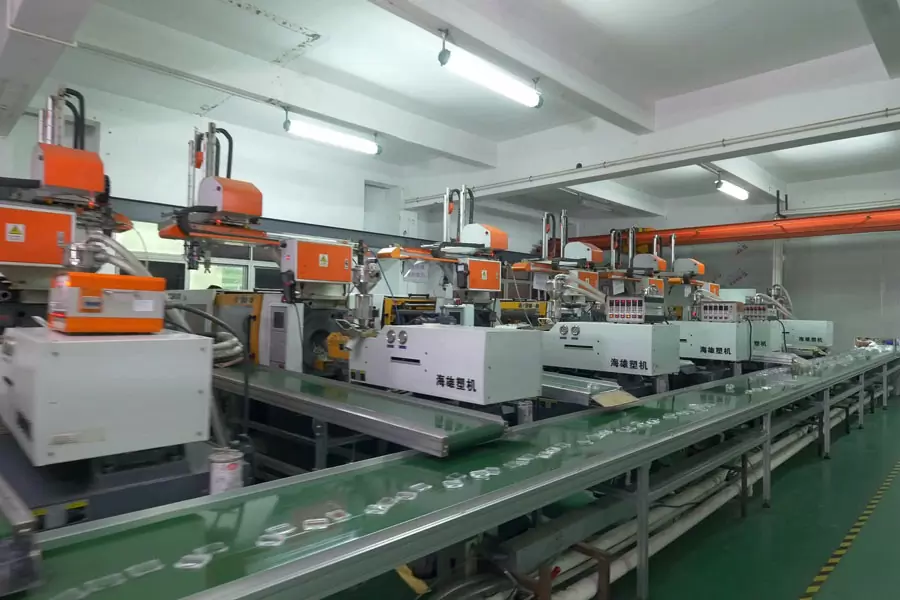
The core cooperative injection molding supplier has twelve 50T-200T injection molding machines, all of which are equipped with manipulators, mold temperature controllers, automatic assembly lines, and dust-free purification workshops. There are 4 automatic production lines in the oil spraying department: one 10,000-level automatic spraying production line (two sprays and two baking), 1 production line (one spray and one baking); 1 manual spraying production line, with a daily output of 150,000 pieces above. With brand-new professional technology, with an environmentally friendly anti-static, fully air-conditioned, dust-free workshop, the working environment is superior, the production equipment is complete, and the product testing equipment is perfect. Need mold making supplies for large quantities of production parts? Looking for a more cost effective and time efficient way of manufacturing parts? Don’t miss our injection molding services! At be-cu.com, we provide high quality and affordable injection molding for prototypes and production parts with quick turnaround times.
-

5 Axis CNC Machining Spiral Bevel Gear Mold
-
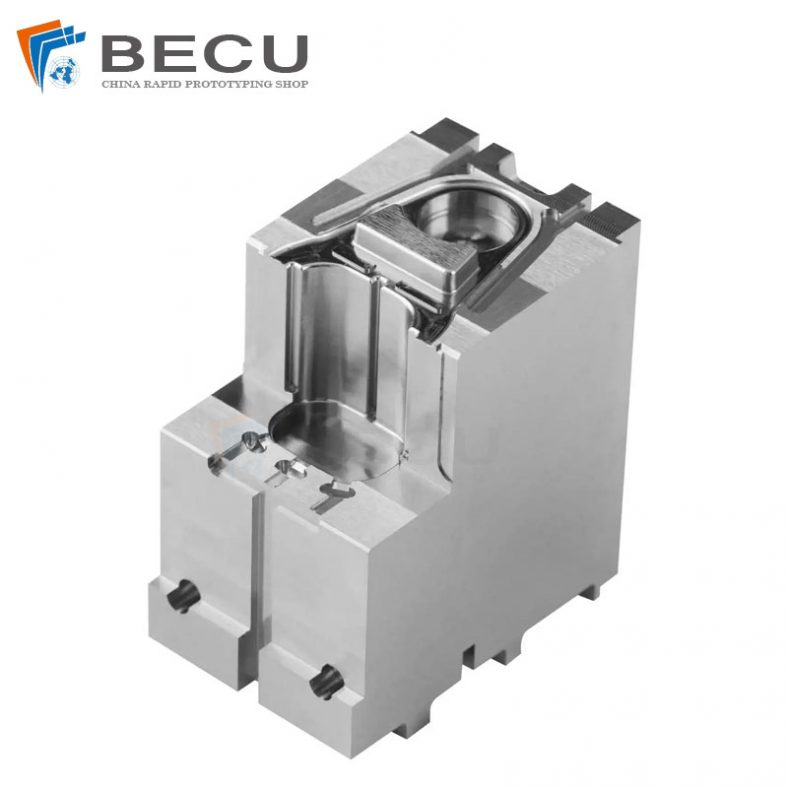
Small Precision Injection Molding Inserts
-
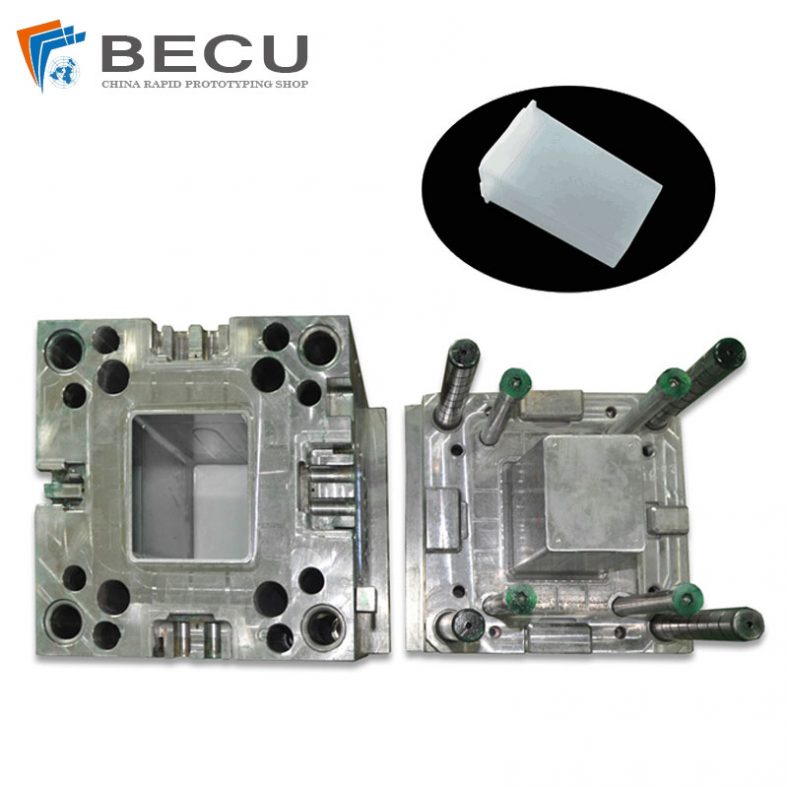
Plastic Storage Box Plastic Injection Mold
-
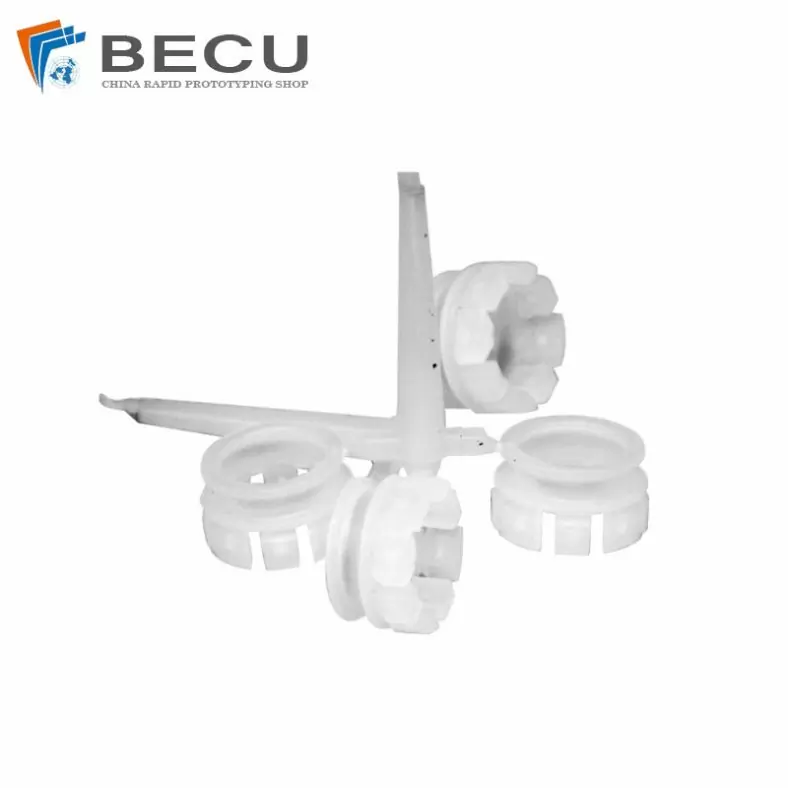
Injection Molding PE-UHMW Retaining Buckle And Ring
-
Cnc Machined UHMW-PE Bottle Turner
-
Shower Inclosure Sleeve By Plastic Injection
-
Injection Secret Security Machine Control Shell
-
Sewing Machine Industrial Control Shell By Plastic Injection